Restoration and Resilience: Notre Dame’s Architectural Journey Post-Fire
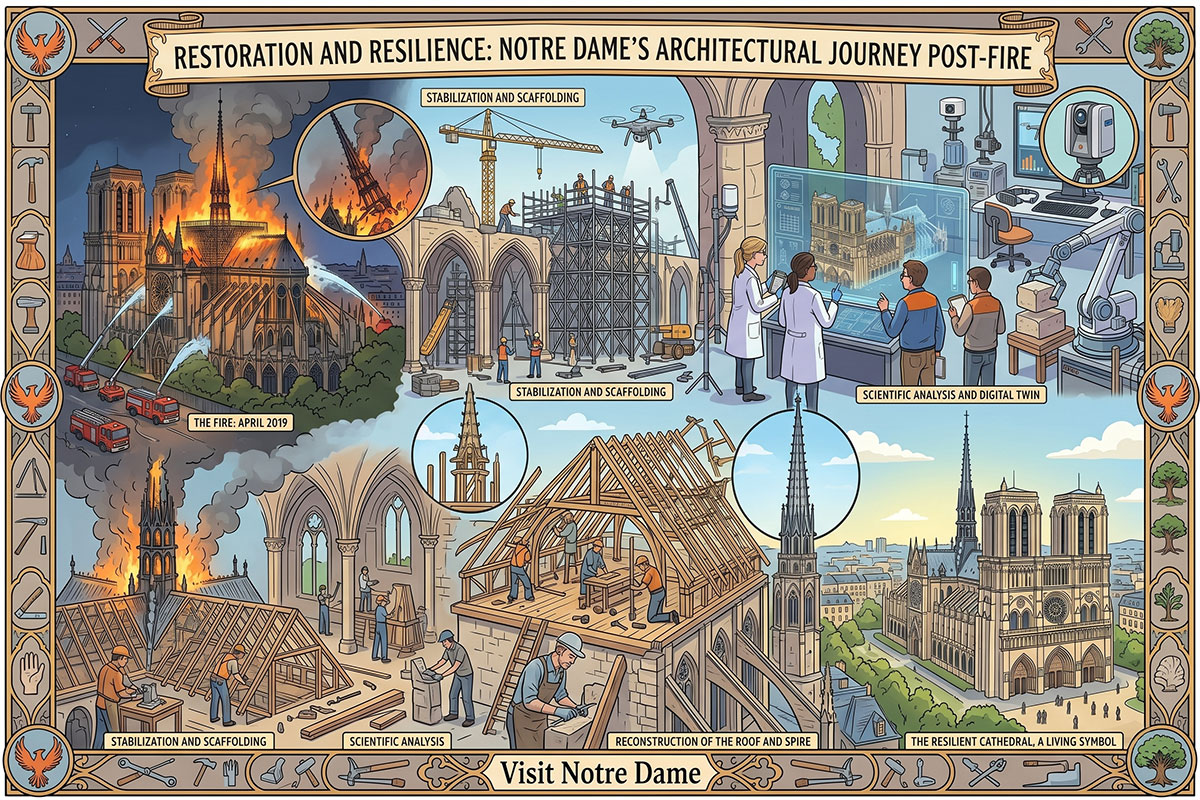
When the world watched the spire of Notre Dame de Paris collapse into the flames on April 15, 2019, a collective gasp echoed across the globe, transcending borders and faiths. It felt like the heart of Paris had stopped beating, leaving behind a void filled with smoke and uncertainty. Now, as we stand in the early days of 2026, looking up at the restored silhouette against the winter sky, the cathedral represents much more than Gothic grandeur; it stands as a testament to human resilience and architectural ingenuity. The journey from the smoldering embers to the reopening has been a masterclass in balancing historical integrity with modern necessity, a narrative that every visitor should understand before stepping through those colossal doors.
The Architectural Strategy: Identity vs. Innovation
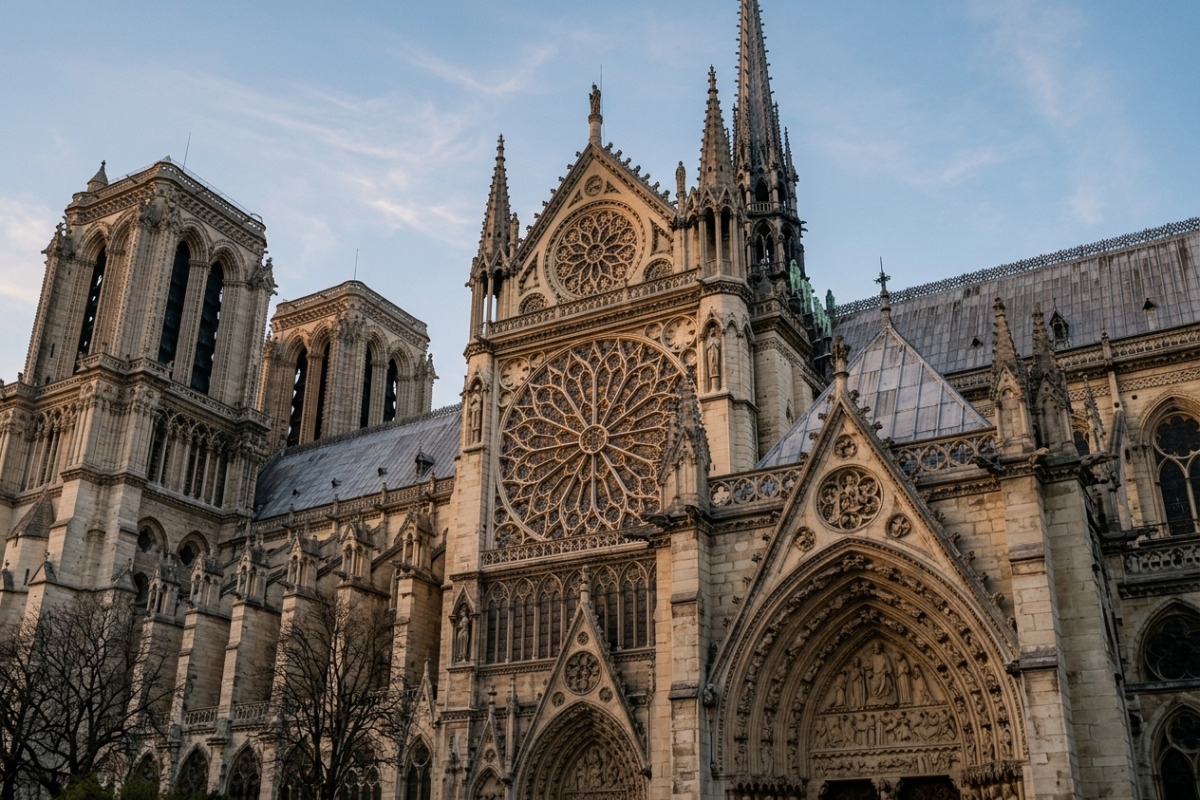
In the immediate aftermath of the fire, a heated debate erupted among architects, historians, and the public regarding how the cathedral should be rebuilt. Proposals ranged from a roof made of crystal to a spire of light, reflecting a desire to imprint the 21st century onto the monument. However, the decision was ultimately made to restore the cathedral to its last known visual state—specifically honoring the 19th-century design of Eugène Viollet-le-Duc for the spire. This strategy was not merely about nostalgia; it was a commitment to architectural continuity. The goal was to heal the wound so seamlessly that future generations would see the cathedral as a unified whole, rather than a patchwork of disjointed eras.
This decision required a forensic approach to architecture. Teams relied on digital scans taken years prior to the fire, historical sketches, and photographs to recreate the intricate details of the timber framing and stonework. The restoration was not just about putting stones back in place; it was about recovering the 'soul' of the structure. By choosing traditional materials—stone, oak, and lead—the architects ensured that the building would breathe and settle exactly as it had for centuries, preserving the dynamic relationship between the structure and the Parisian elements.
Resurrecting 'The Forest': A Feat of Carpentry
One of the most significant losses was the medieval roof framework, affectionately known as 'The Forest' because it consisted of thousands of oak trees. Rebuilding this required a massive mobilization of France’s forestry and carpentry sectors. The following table outlines the sheer scale and methodology used to recreate this hidden masterpiece:
| Component | Material Source | Technique Used | Architectural Significance |
| The Framework | Over 1,000 French oaks selected from 200 forests. | Medieval hewing (hand-cutting with axes) to respect the grain. | Provides the structural flexibility needed to support the lead roof. |
| The Spire | High-density oak for structural integrity. | Complex joinery derived from Viollet-le-Duc’s original plans. | Restores the vertical focal point of the cathedral's silhouette. |
| The Vaults | Limestone quarried near Paris. | Traditional masonry and mortar consolidation. | Reclosed the 'wounds' in the ceiling caused by the falling spire. |
The insistence on using axes rather than industrial saws to shape the beams was a critical architectural choice. Hand-hewn wood follows the natural fibers of the tree, making the beams stronger and more resistant to warping over time. This dedication to medieval techniques ensures that the new roof is not just a replica in shape, but a twin in structural behavior.
The Interior: Light Returns to the Gothic Masterpiece
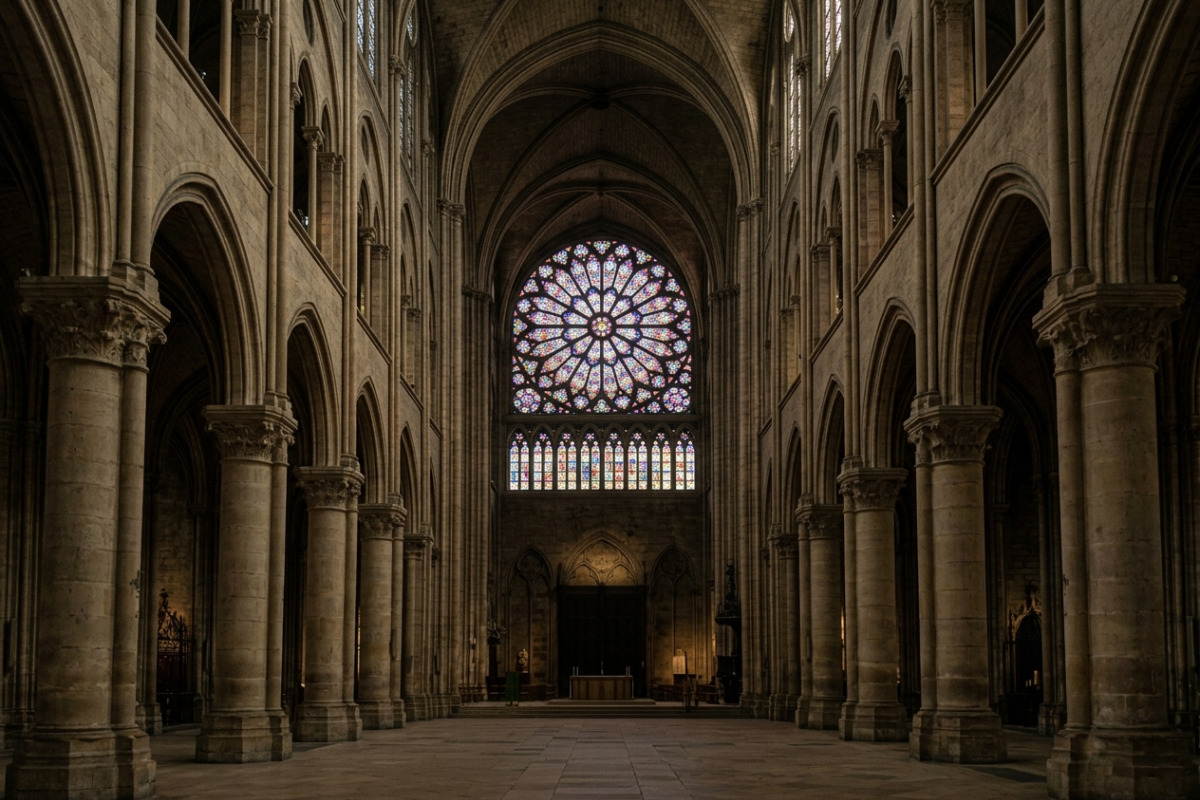
While the exterior restoration garnered the most headlines, the transformation inside the cathedral has been equally profound. Years of soot, dust, and the residue from the fire had darkened the interior, obscuring the vibrancy of the chapels and the nave. The cleaning process has revealed the blonde creaminess of the stone and the vivid colors of the painted chapels, shocking many who only remember the gloomy, candle-smoke-stained interior of the past. To fully appreciate the layout and the specific areas that have been revitalized, visitors should take a moment to Explore the Cathedral sections digitally before their visit to understand the layout of the choir and the ambulatory.
The Grand Organ, the voice of Notre Dame, also faced a perilous journey. While it was not burned, it was choked by lead dust and subjected to thermal variations. Every single one of its 8,000 pipes had to be dismantled, cleaned, and re-voiced. Today, the acoustics are crisper than they have been in decades. The interplay of light through the cleaned stained glass windows now dances across the floor, creating an ethereal atmosphere that feels both ancient and brand new.
Navigating the New Visitor Experience
With the cathedral fully operational in 2026, the influx of visitors has been immense. The management of crowds has become an architectural challenge in itself, requiring new flow strategies to protect the sanctity of the site while accommodating millions. The forecourt has been redesigned to offer a greener, more welcoming transition from the city to the sanctuary. However, spontaneity is no longer the best strategy for travelers.
- Advance Planning is Crucial: The days of simply walking up to the queue are gone during peak seasons. You must secure your entry in advance. Checking for Tickets online is the only way to guarantee access without spending hours waiting.
- Security and Preservation: New climate control and air filtration systems have been integrated invisibly to protect the stone and artwork from humidity and pollution.
- Liturgical Schedule: Remember that despite being a monument, it remains an active place of worship. Reviewing the Visiting Information will help you time your visit to avoid restricted areas during mass, or conversely, to attend a service.
Pro Tip: Consider visiting during the shoulder seasons (spring or fall) for a less crowded experience and pleasant weather. Don't forget to look up! The restored stained glass windows are best viewed when the sun is shining.
Challenges That Remain: The Surroundings and Legacy
Even though the spire pierces the sky once more, the work is not entirely finished. The restoration of Notre Dame has sparked a broader urban project involving the surroundings of the Île de la Cité. The landscaping of the parvis (the square in front of the cathedral) is undergoing a transformation to create a climate-resilient space that highlights the cathedral's facade while providing shade and cooling areas for visitors. This phase of the project aims to integrate the cathedral more harmoniously with the Seine and the urban fabric of Paris.
Furthermore, the cleanup of lead pollution remains a sensitive and strictly monitored aspect of the site's management. The fire released tons of lead into the atmosphere, and ensuring the safety of the immediate vicinity has been a paramount engineering challenge. Regular monitoring ensures that the site remains safe for the millions of pilgrims and tourists who flock here. For those with specific concerns about accessibility or safety protocols, the official FAQ page offers detailed insights into current measures.
A Symbol of enduring Hope
The reconstruction of Notre Dame de Paris is more than a construction project; it is a narrative of rising from the ashes. It reminds us that heritage is not static—it is living, fragile, and requires constant care. As you walk through the nave today, you are witnessing a victory of art over destruction. The white stone gleams not just because it is clean, but because it carries the weight of a world that refused to let it disappear. Whether you are an architecture enthusiast or a casual traveler, the resurrected Notre Dame offers a profound connection to history that is more tangible now than ever before.