The Best Photo Spots in Notre Dame: A Photographer’s Guide to the Icon
Paris is a city that demands to be photographed, yet few landmarks command the lens quite like Notre Dame. Standing on the Île de la Cité, the cathedral is not merely a structure of stone and glass; it is a testament to resilience, history, and architectural brilliance. As we embrace the fresh energy of January 2026, the fully restored cathedral offers a visual feast that is more vibrant than ever before. Whether you are a professional photographer carrying a bag full of lenses or a traveler wanting to capture the perfect moment on your smartphone, knowing exactly where to stand makes all the difference. The light in Paris changes rapidly, and the crowds can be dense, so planning your photographic journey around the cathedral is essential for capturing those breathtaking shots that define a trip to France.
The Iconic Exterior: Capturing the Grandeur
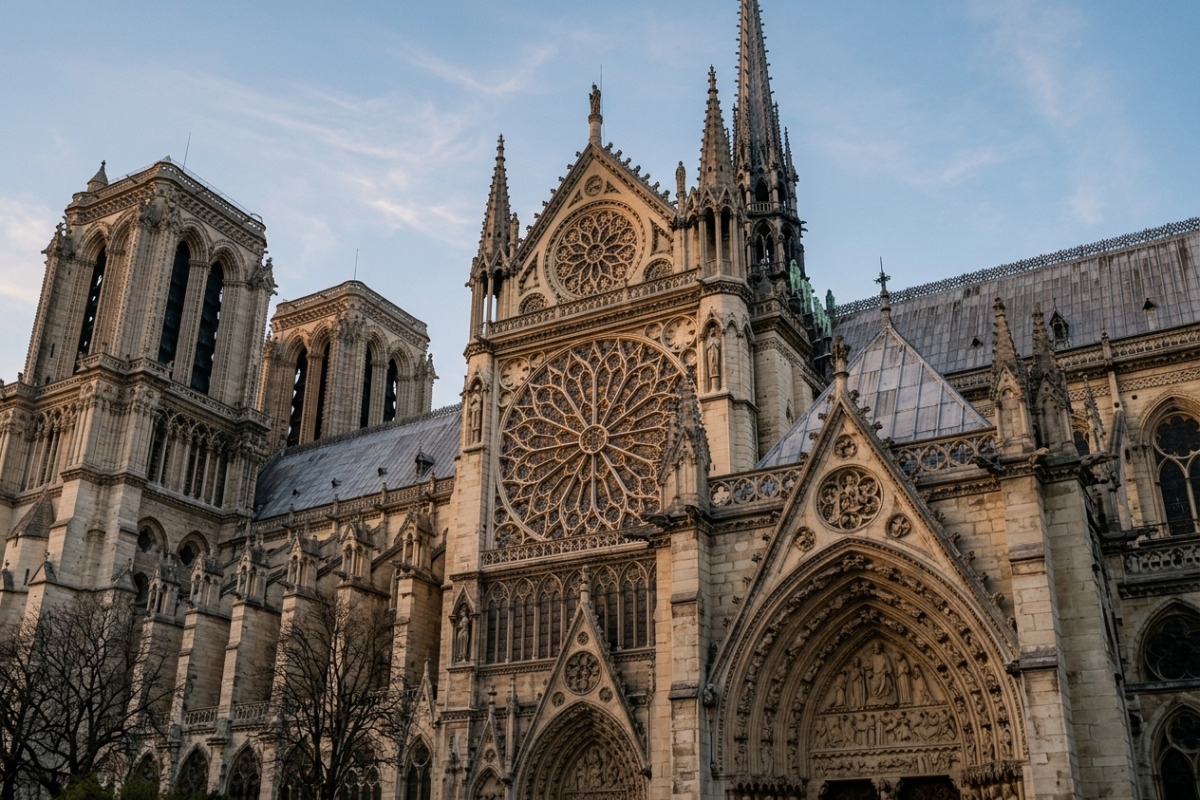
The exterior of Notre Dame is a masterclass in French Gothic architecture, offering diverse angles that change character dramatically depending on where you stand. The most famous view is, of course, from the Parvis Notre-Dame, the large square facing the western facade. Here, you are greeted by the two majestic towers and the intricate Portal of the Last Judgment. To get the best shot here without a sea of tourists, arrive just after sunrise. The morning light hits the facade softly, illuminating the stone in a warm, golden hue that is impossible to replicate later in the day. If you want to capture the sheer scale of the building, try shooting from a low angle near the Charlemagne statue, which adds a compelling foreground element to your composition.
The Seine River Banks
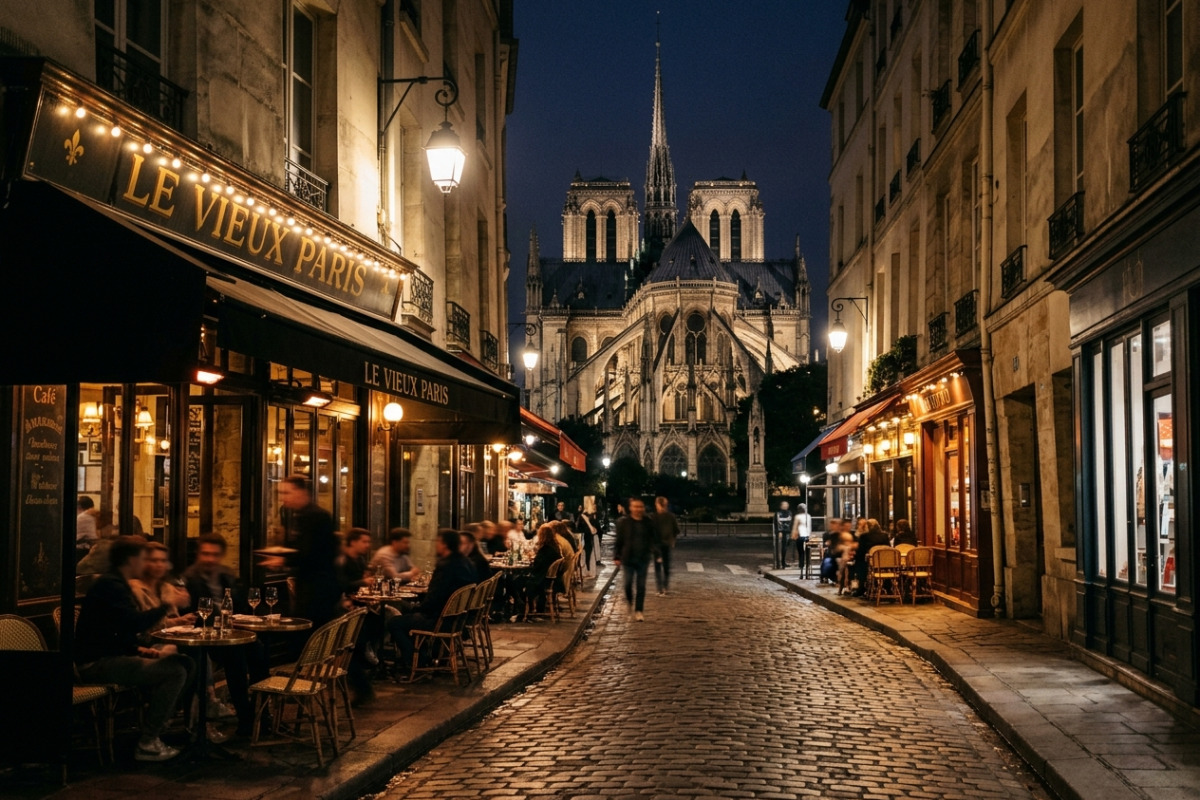
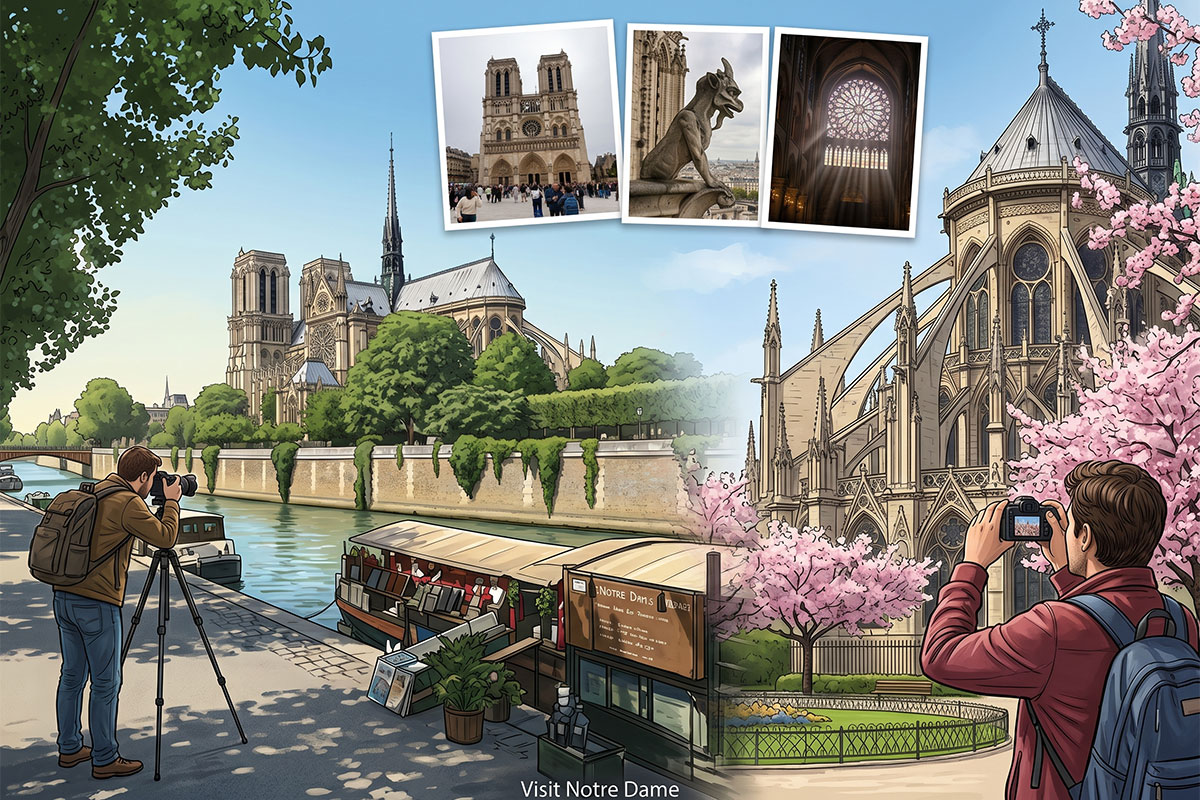
For a more romantic and painterly perspective, move away from the main square and head down to the banks of the Seine. The Quai de Montebello, located on the Left Bank, offers one of the most stunning panoramic views of the cathedral’s southern side. From here, you can frame the intricate flying buttresses and the soaring new spire against the sky, often with the famous Bateaux Mouches gliding by on the river. In the autumn and winter months, the trees lining the quay frame the cathedral beautifully, adding natural texture to your architectural shots. This spot is particularly magical during the 'blue hour'—that brief window of twilight after sunset—when the cathedral is floodlit, casting a shimmering reflection onto the dark waters of the Seine.
Square Jean XXIII and the Flying Buttresses
Walk around to the back of the cathedral to discover a completely different aesthetic at Square Jean XXIII. This garden area provides the closest view of the spectacular flying buttresses that support the choir. It is a favorite spot for photographers who love details, as you can zoom in on the gargoyles and the delicate stonework that seems to defy gravity. In the spring, this square is filled with cherry blossoms, creating a dreamy pink foreground that contrasts perfectly with the grey stone of the apse. Even in January, the stark beauty of the winter trees allows for unobstructed views of the architectural skeleton, highlighting the engineering marvels that have kept this building standing for centuries.
Inside the Cathedral: Light and Shadow
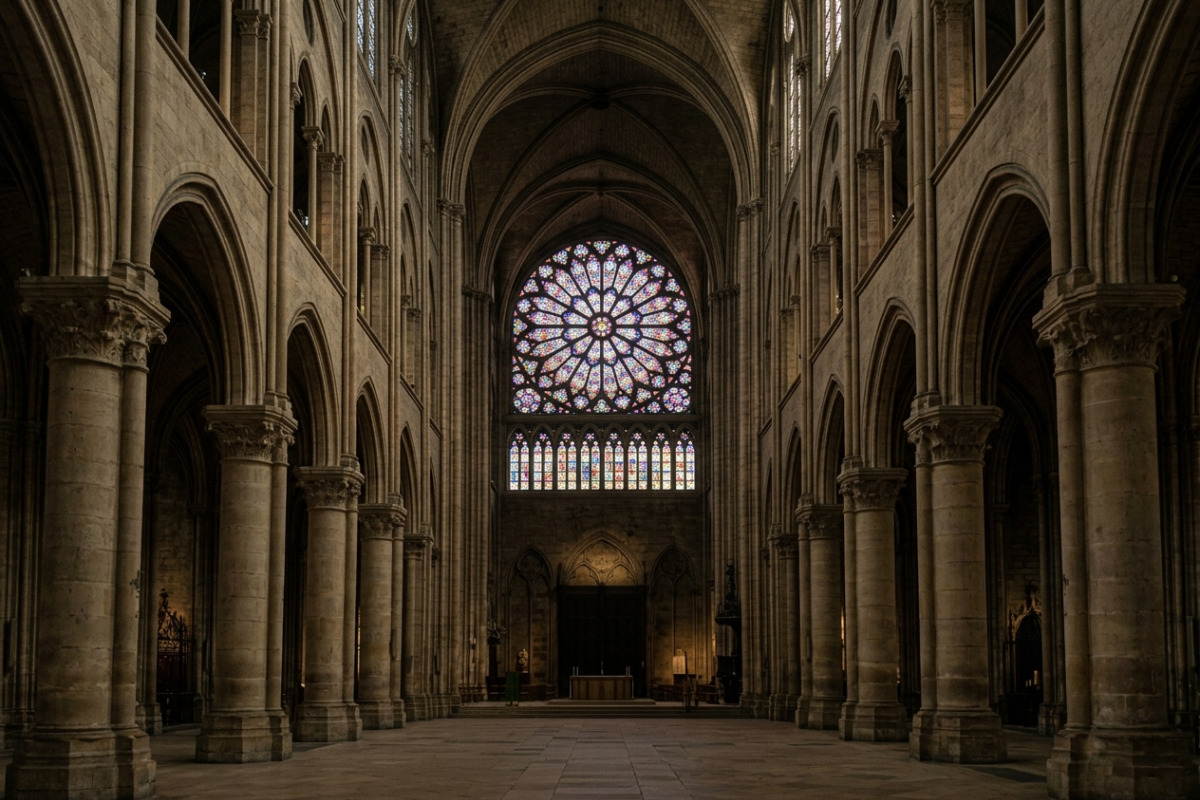
Stepping inside the cathedral is a transformative experience, and photographing the interior requires a keen eye for lighting conditions. Since the reopening, the interior stone has been cleaned to a pristine brightness, allowing light to travel further into the nave. Before you plan your interior shoot, ensure you have secured your tickets in advance, as queues can still be long and you don't want to lose the best lighting of the day waiting in line. Once inside, the sheer verticality of the nave is the first thing to capture. A wide-angle lens is your best friend here, allowing you to encompass the soaring vaulted ceilings and the long aisle leading toward the altar.
The Rose Windows
The crown jewels of Notre Dame’s interior are undoubtedly the three great Rose Windows. The South Rose Window, visible from the transept, is particularly spectacular around midday when the sun is high enough to pierce through the glass. The kaleidoscope of blues, reds, and purples projected onto the stone floor creates an ethereal atmosphere that is difficult to describe but wonderful to photograph. When photographing stained glass, remember to underexpose your shot slightly; this prevents the bright colors of the glass from being blown out while keeping the surrounding stone in moody shadow. To understand which window you are looking at and the history behind these glass masterpieces, it is helpful to review the Cathedral Sections guide before your visit.
The Side Chapels and Ambulatory
While the main nave attracts the most attention, the side chapels offer intimate photo opportunities that many visitors overlook. These smaller spaces are often filled with religious art, statues, and votive candles that provide a warm, flickering light perfect for atmospheric photography. Walking through the ambulatory (the walkway behind the altar) gives you unique angles of the choir and the new liturgical furniture. This area is generally quieter, allowing you to compose your shots with more patience. For those interested in the logistical aspects of bringing camera gear or tripods, checking the Visiting Information page is crucial, as tripod use is often restricted inside to prevent obstruction.
Best Times for Photography
Lighting is the most critical element of photography, and Notre Dame interacts with the sun in specific ways throughout the day. To help you plan your itinerary, here is a breakdown of the best times to visit specific locations around the cathedral:
| Time of Day | Best Location | Why It Works |
| Early Morning (Sunrise) | Parvis (Main Facade) & Trocadero | Soft light on the front face, fewer crowds, peaceful atmosphere. |
| Mid-Morning | Square Jean XXIII | The sun illuminates the apse and flying buttresses from the east/southeast. |
| High Noon | Interior (South Rose Window) | Strongest light penetrating the stained glass, creating vibrant color projections. |
| Late Afternoon (Golden Hour) | Quai de la Tournelle | Warm, golden light hitting the side of the cathedral; perfect for classic postcards. |
| Blue Hour / Night | Pont de l'Archevêché | Illuminated cathedral against a deep blue sky; captures reflections in the Seine. |
Unique Perspectives and Hidden Angles
Beyond the standard postcard shots, there are unique vantage points that offer a fresh perspective on the Lady of Paris. One such spot is from the Île Saint-Louis. Crossing the Pont Saint-Louis gives you a direct line of sight to the apse, but stepping onto the island itself allows for framing the cathedral between narrow 17th-century streets. Another excellent location is the Petit Pont. From here, you can capture the cathedral looming large in the background with the hustle and bustle of the Latin Quarter in the foreground, effectively capturing the energy of the city alongside the serenity of the church. If you have questions about accessibility for these areas or specific rules regarding commercial photography, the FAQ section is a valuable resource to consult.
The View from Above
While not strictly "in" the cathedral, finding a high vantage point nearby can yield incredible results. The Panthéon or the Tower of Montparnasse offer distant views, but for a closer look, the top floor of the Institut du Monde Arabe provides a stunning, unobstructed terrace view. From this elevation, you can see how Notre Dame sits like a ship anchored in the Seine, dominating the cityscape. This angle is particularly powerful for showcasing the restored roof and the intricate lead work of the spire, details that are hard to appreciate from the ground level. It reminds us of the massive effort it took to bring this landmark back to life.
Capturing the Soul of Paris
Photography at Notre Dame is about more than just settings and megapixels; it is about capturing a feeling. It is the contrast between the enduring stone and the fleeting clouds, the silence of the nave against the noise of the city, and the history that permeates every block of limestone. As you explore these spots, take a moment to put the camera down and simply look. The best photographs often come after you have truly connected with the subject. Whether you are capturing the grand silhouette against a burning sunset or the delicate play of light on a statue, your photos will serve as timeless reminders of your journey to the heart of Paris.