The Role of Art in Notre Dame's Architecture: A Gothic Symphony
When you stand before Notre Dame de Paris, you are not merely looking at a building; you are witnessing a profound dialogue between engineering and theology, mediated entirely through art. As we admire the cathedral in January 2026, fully restored to its breathtaking glory, it becomes evident that the structure was never intended to be a bare shell. Every stone, every pane of glass, and every carved figure serves a dual purpose: to support the colossal weight of the cathedral and to tell a story to those who enter. The architecture does not just house the art; the architecture is the art, creating a seamless tapestry that has captivated visitors for over eight centuries.
The genius of French Gothic architecture lies in its ability to transform heavy stone into something that feels weightless and ethereal. In the Middle Ages, the majority of the population could not read, so the cathedral served as a "liber pauperum"—a book for the poor. The intricate sculptures and luminous windows were the pages of this book, illustrating biblical narratives, the lives of saints, and the moral struggles of humanity. To truly appreciate this masterpiece, one must look beyond the sheer size of the monument and investigate how art and architecture intertwine to create a spiritual experience that transcends time.
The Symbiosis of Stone and Light
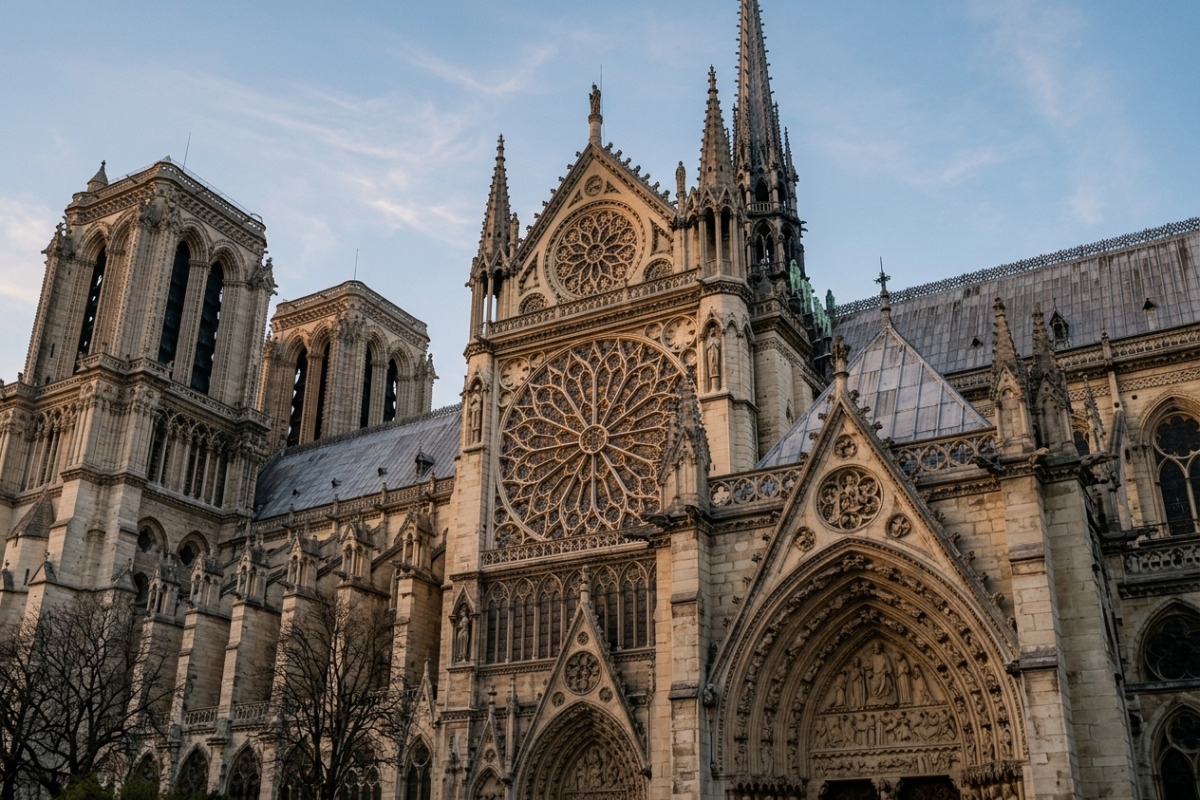
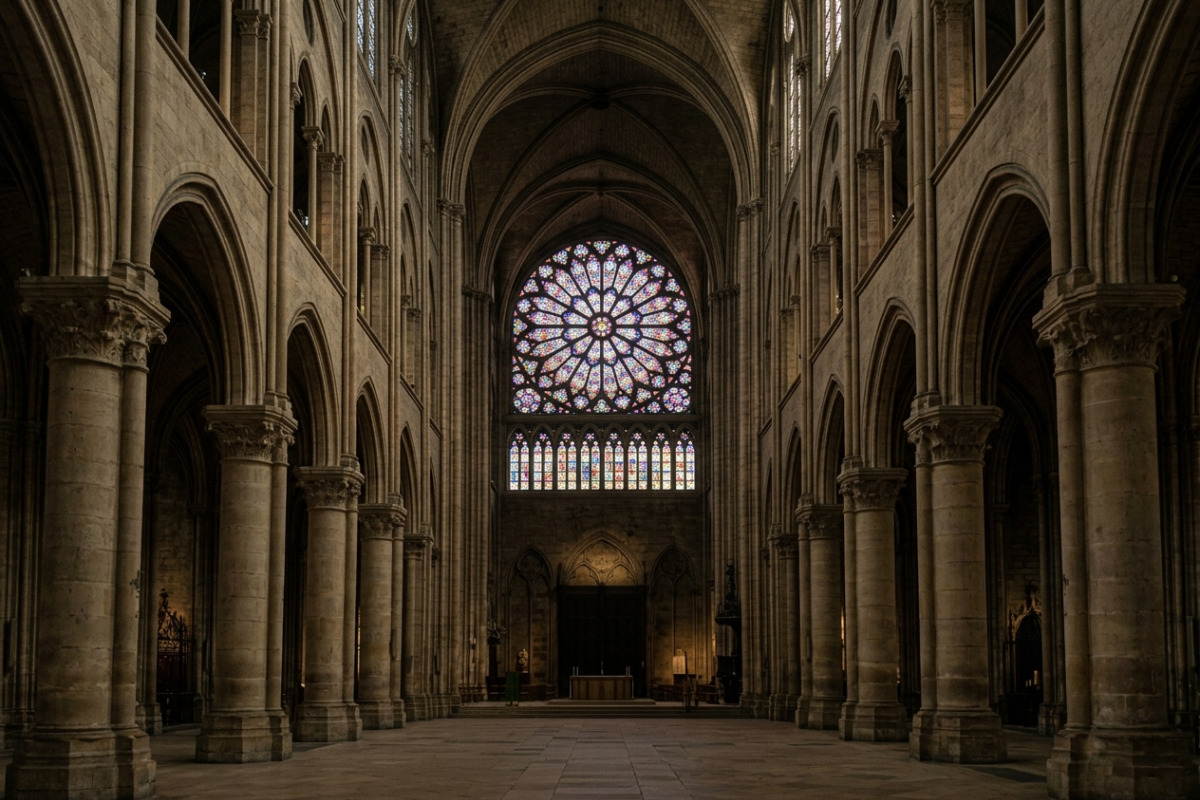
The most defining characteristic of Notre Dame’s architecture is its revolutionary use of light, made possible by specific engineering advancements. The invention of the flying buttress was an architectural necessity to hold up the soaring walls, but it had an immense artistic byproduct: it allowed the walls to be opened up. Instead of solid, dark masonry, the architects could install vast expanses of stained glass. This transition from Romanesque heaviness to Gothic lightness turned the cathedral into a vessel for Lux Nova, or "New Light," which was believed to be the direct manifestation of the divine.
The flying buttresses, a key element of Gothic architecture, not only provided structural support but also allowed for the construction of taller and thinner walls. This innovation involved transferring the weight of the roof and walls outwards, distributing the load and reducing stress on the main structure. The use of ribbed vaults, another architectural marvel, further lightened the load on the walls by concentrating the weight onto specific points, enabling the creation of larger windows and more open spaces.
The three great Rose Windows are the crown jewels of this artistic vision. Dating back to the 13th century, these circular masterpieces are not merely decorative; they are complex geometric feats that represent the infinite nature of the universe. The North Rose Window, which has retained much of its original glass, glows with cool blues and violets, symbolizing the Old Testament and the Virgin Mary. In contrast, the South Rose Window, often bathed in the warmer sunlight of the day, depicts the New Testament and Christ Triumphant. If you wish to understand where these masterpieces fit within the broader layout, you can Explore the Cathedral sections online before your visit to identify their exact locations.
The Storytellers in Stone: Portals and Façades
Before a visitor even steps inside, the exterior of Notre Dame creates an overwhelming artistic impression. The West Façade is a masterpiece of balance and harmony, but it is the sculptures surrounding the three main portals that demand the most attention. These are not random decorations; they are carefully curated theological lessons carved into limestone. The central portal, the Portal of the Last Judgment, offers a dramatic visual representation of heaven and hell, guiding the medieval pilgrim on how to live a righteous life. The level of detail in the facial expressions and the drapery of the clothing showcases the high level of craftsmanship attained by medieval sculptors.
Above the portals stands the Gallery of Kings, a row of 28 statues representing the Kings of Judah and Israel. These figures demonstrate how political power and religious authority were visually linked in the cathedral's design. During the French Revolution, these statues were mistakenly identified as Kings of France and were beheaded by angry mobs, only to be restored later by the architect Eugène Viollet-le-Duc in the 19th century. This layering of history adds another dimension to the art; it is a survivor of political upheaval as much as it is a religious icon.
Guardians of the Skyline: Gargoyles and Chimeras
Perhaps the most famous artistic elements of Notre Dame’s architecture are the creatures that inhabit its upper levels. While often grouped together in popular culture, there is a distinct difference between gargoyles and chimeras, both in function and artistic intent. Understanding this distinction enriches the experience of viewing the cathedral’s silhouette against the Paris sky.
- Gargoyles (Gargouilles): These are functional architectural elements designed to project rainwater away from the masonry. They extend outward from the building, often carved in the shape of fantastic beasts with open mouths to spout water, protecting the stone from erosion.
- Chimeras (Chimères): These are purely decorative statues found on the gallery connecting the two towers. The most famous is the "Stryge," the brooding figure looking out over Paris. Added largely during the 19th-century restoration, they represent the romanticized view of the Middle Ages.
These creatures serve as a reminder that Gothic art embraced not just the divine and beautiful, but also the grotesque and the terrifying, creating a balance that reflected the complexity of the medieval worldview. To see these figures up close, planning is required. As this is one of the most popular areas, we highly recommend securing tickets well in advance to access the towers and upper galleries.
Interior Sculptures and the Choir Screen
Stepping inside the cathedral, the artistic focus shifts from the grandiose to the intimate. The sheer verticality of the nave draws the eye upward, but the ground level is filled with exquisite sculptural works. One of the most significant artistic additions is the choir screen (clôture du chœur). This stone partition, separating the clergy from the congregation, is adorned with polychrome sculptures depicting the life of Christ. These carvings are remarkably dynamic, showing scenes full of emotion and movement, serving as a visual scripture for those wandering the ambulatory.
The sanctuary itself houses a masterpiece of Baroque sculpture that contrasts with the Gothic surroundings: the Pietà by Nicolas Coustou. Flanked by statues of Louis XIII and Louis XIV, this ensemble represents the "Vow of Louis XIII." The fluid marble drapery and the emotional agony on the face of the Virgin Mary provide a striking counterpoint to the rigid, vertical lines of the medieval architecture surrounding it. It is a perfect example of how the cathedral is a living museum, accumulating artistic contributions from various centuries.
| Artistic Element | Primary Material | Architectural Function | Artistic Purpose |
| Flying Buttresses | Limestone | Structural Support | Allowed for larger windows, creating a skeletal aesthetic. |
| Rose Windows | Stained Glass & Lead | Lighting | Symbolizing the divine light and telling biblical stories through color. |
| Gargoyles | Stone | Water Drainage | Protecting the walls from rain while warding off evil spirits. |
| Choir Screen | Polychrome Stone | Separation of Space | Narrating the life of Christ to pilgrims walking the ambulatory. |
The Modern Era and Restoration
The tragic fire of 2019 and the subsequent restoration efforts have highlighted the resilience of Notre Dame's art. The restoration process itself became a blend of modern science and traditional artistry. Artisans used medieval techniques to restore the timber roof (the "Forest") and clean the interior walls, revealing the original brightness of the stone that had been hidden under centuries of grime. Today, in 2026, the art of Notre Dame looks perhaps more vibrant than it has in hundreds of years. The cleaning of the chapels has unveiled vivid murals and paintings that many visitors previously missed in the gloom.
For those preparing a trip to Paris, understanding the logistics is key to a stress-free experience. The cathedral can be crowded, and knowing the best times to visit can make a difference in how you experience the art. For detailed advice on opening hours and accessibility, please consult the Visiting Information page. Additionally, if you have specific concerns about what is currently open or restrictions on photography, the FAQ section is an excellent resource to check before your arrival.
Conclusion
Notre Dame de Paris is far more than a historical monument; it is a testament to the human desire to reach for the divine through beauty. The role of art in its architecture is foundational, not ornamental. From the structural elegance of the flying buttresses to the terrifying gaze of the chimeras and the kaleidoscope of the Rose Windows, every element works in harmony. To visit Notre Dame is to step inside a masterpiece where engineering and art are indistinguishable, creating an atmosphere of awe that continues to resonate with millions of visitors from around the globe.