The Evolution of Notre Dame: A Historical Journey
Standing on the Île de la Cité, gazing up at the twin towers of Notre Dame, one feels the weight of nearly a millennium of history. This is not merely a structure of limestone and lead; it is the beating heart of Paris, a silent witness to coronations, revolutions, and the shifting tides of human endeavor. As we step into 2026, the cathedral stands more resplendent than ever, having risen from the ashes of the devastating 2019 fire. To understand the true magnitude of this landmark, we must peel back the layers of time and explore the architectural and cultural evolution that has defined this Gothic masterpiece for centuries.
The Vision of Bishop Maurice de Sully
The story begins in 1163, a time when Paris was rapidly growing in political and economic power. Bishop Maurice de Sully deemed the existing Romanesque cathedral unworthy of the city's rising status. He envisioned a monument that would touch the heavens, a testament to faith utilizing the cutting-edge engineering of the time. The foundation stone was laid in the presence of King Louis VII and Pope Alexander III, marking the start of a construction marathon that would last nearly two centuries.
The transition from Romanesque to Gothic architecture was revolutionary. The heavy walls of the past gave way to soaring heights and light. This was made possible by architectural innovations that allowed the cathedral to evolve even as it was being built. The choir was completed first, followed by the nave and the iconic western façade. By the time the cathedral was largely finished in the mid-14th century, it had already become a collaborative masterpiece involving generations of architects, masons, and artisans.
Architectural Mastery: Light and Height
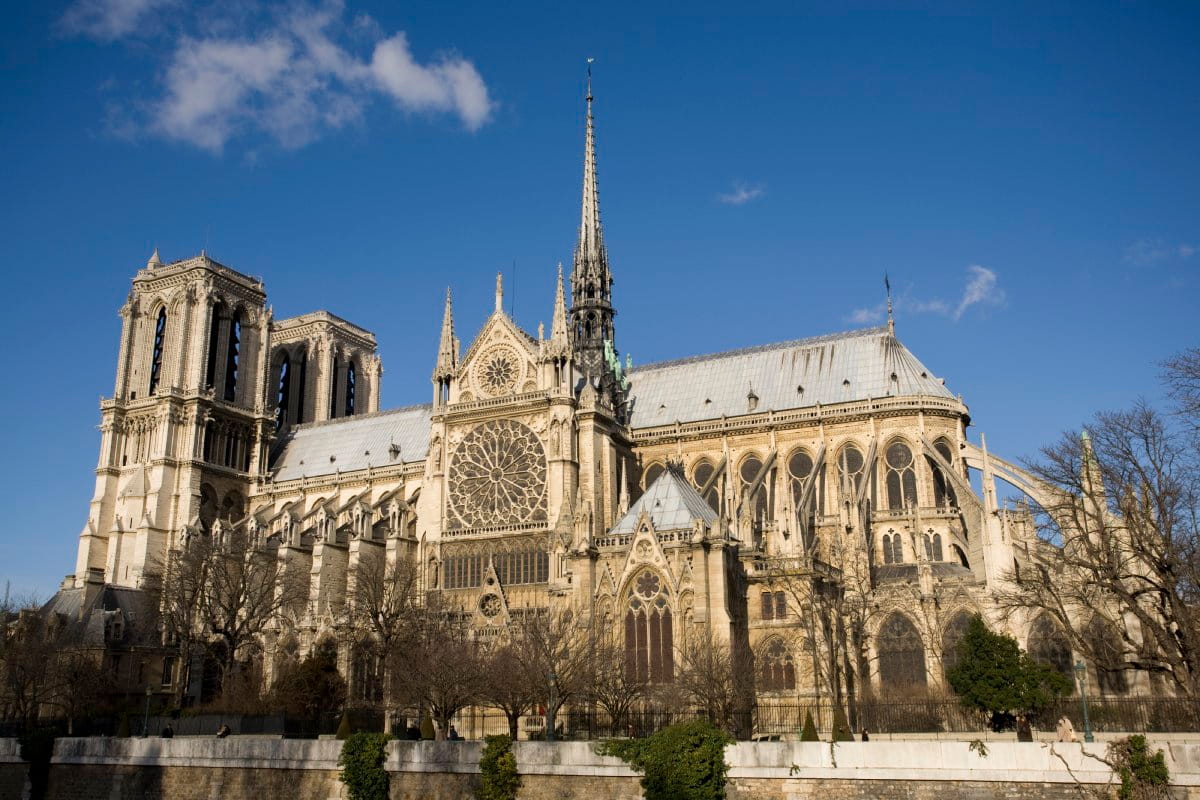
What makes Notre Dame a marvel of engineering is the daring use of flying buttresses. Originally, the architects did not plan for them to be visible, but as the walls grew higher and thinner to accommodate larger windows, stress fractures began to appear. The external arches were added to support the weight of the roof, effectively acting as an exoskeleton. This allowed for the installation of the magnificent stained glass, including the three Rose Windows, which bathe the interior in ethereal, kaleidoscopic light.
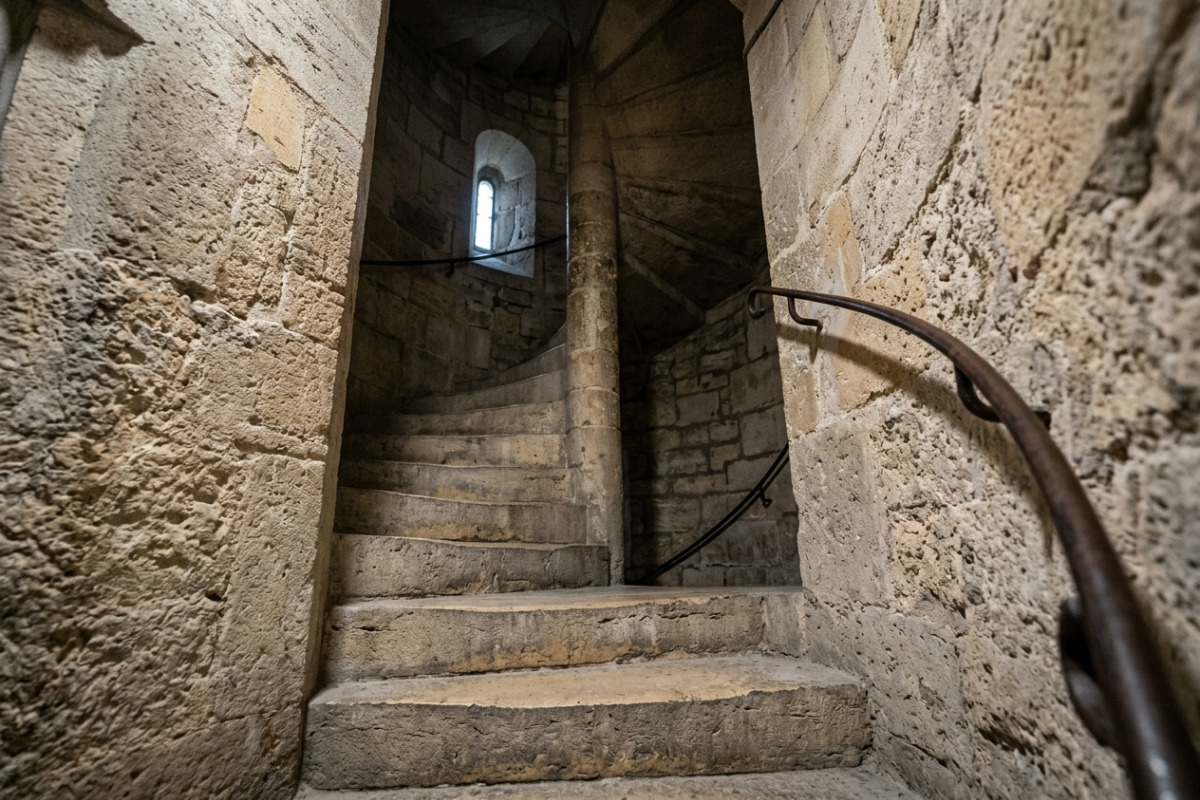
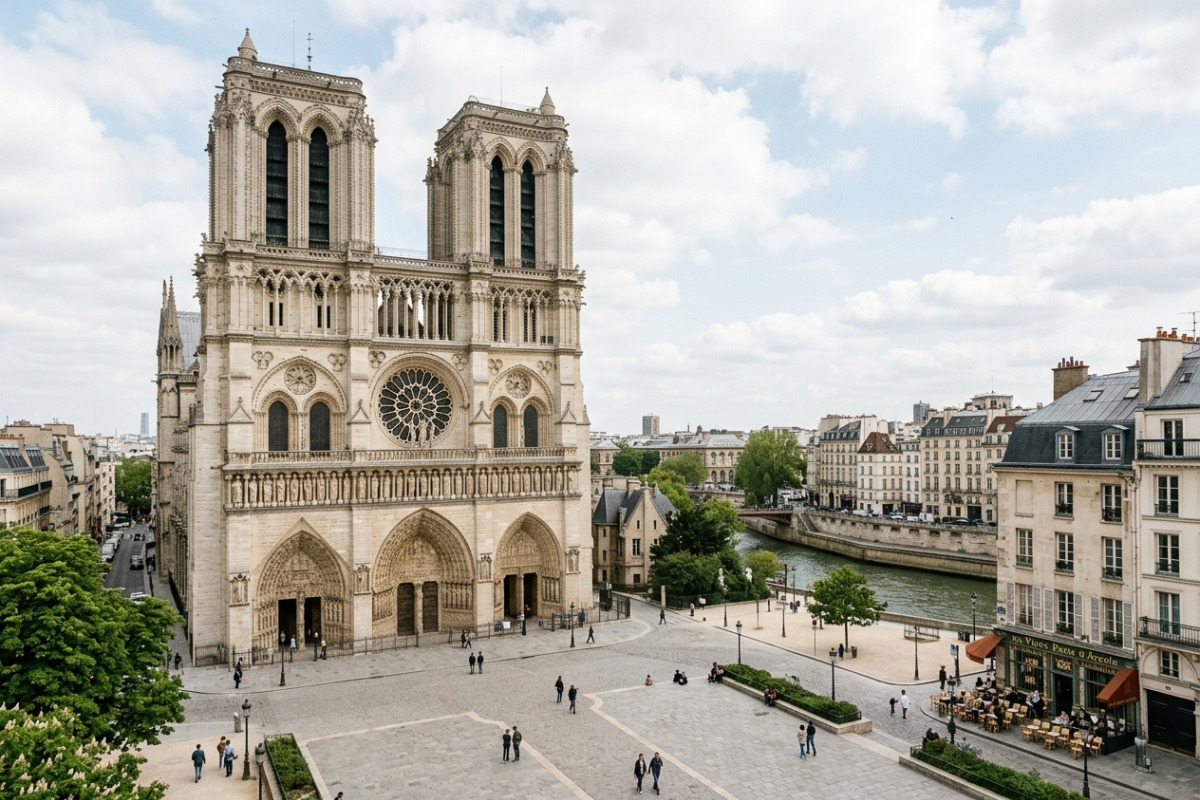
To truly appreciate these architectural nuances, visitors today can explore the Cathedral through its various dedicated sections. From the dizzying heights of the towers to the solemnity of the crypt, each area tells a different chapter of the construction saga. The intricate sculptures of the portals served as a "poor man's Bible," teaching biblical stories to a largely illiterate medieval population through stone.
Turbulence, Desecration, and Literary Salvation
History has not always been kind to Notre Dame. During the French Revolution in the late 18th century, the cathedral suffered immense damage. It was rededicated to the Cult of Reason, and many statues of biblical kings on the façade were beheaded, as the revolutionaries mistook them for French monarchs. By the early 19th century, the building was in such a state of disrepair that city officials considered demolishing it.
Salvation came from an unlikely source: a novel. Victor Hugo’s 1831 masterpiece, The Hunchback of Notre Dame, reignited public passion for the cathedral. Hugo wrote eloquently about the "symphony in stone," shaming the city into action. This led to the massive restoration project led by Eugène Viollet-le-Duc. He not only repaired the damage but added his own Neo-Gothic touches, including the famous gargoyles (chimeras) and the towering wooden spire that would tragically fall centuries later.
Key Eras of Transformation
| Era | Key Event | Architectural Impact |
| 1163 - 1345 | Construction | Transition to Gothic style; flying buttresses introduced. |
| 1790s | French Revolution | Destruction of statues; melting of bells; structural neglect. |
| 1844 - 1864 | Viollet-le-Duc Restoration | Addition of the spire; restoration of the façade; new gargoyles. |
| 2019 - 2024 | The Great Fire & Rebuild | Reconstruction of the roof ("The Forest") and spire; cleaning of interior stone. |
The Fire of 2019 and the Phoenix Rising
The images of April 15, 2019, are seared into the global memory. The world watched in horror as flames engulfed the roof and Viollet-le-Duc’s spire crashed through the vault. However, the tragedy sparked a global movement of solidarity. The five-year restoration period that followed was a feat of modern determination combined with medieval craftsmanship. Artisans used centuries-old techniques to recreate the oak framework of the roof, ensuring the soul of the building remained intact. The meticulous process involved sourcing oak trees from across France, mirroring the original construction methods used nearly a millennium ago.
Now, in January 2026, we witness the cathedral in a state of pristine beauty perhaps not seen since its original completion. The cleaning of the interior walls has revealed the creamy whiteness of the stone, stripping away centuries of grime and soot. This painstaking cleaning process, using specialized techniques, has unveiled hidden details and restored the luminosity of the cathedral's interior. The restoration was not just a repair job; it was a reaffirmation of the cathedral's endurance. For those planning to witness this rebirth firsthand, checking the current visiting information is essential, as the post-restoration protocols ensure the preservation of this renewed treasure. Visitors can expect enhanced security measures and timed entry to manage the anticipated crowds.
Cultural Significance Beyond the Stone
Notre Dame has always been more than a religious sanctuary. It is a cultural archive. It housed the Crown of Thorns, witnessed the coronation of Napoleon Bonaparte, and served as the backdrop for the liberation of Paris in 1944. Its bells, particularly the great bourdon Emmanuel, have rung out to mark the end of wars and national tragedies alike.
Today, the experience of visiting is a blend of spiritual reflection and historical appreciation. Visitors can once again walk the nave and admire the resilience of human creativity. Due to the immense popularity of the restored site, it is highly recommended to secure tickets well in advance to access specific areas like the crypt or the tower climbs, which offer unparalleled views of the city. The restored stained glass windows, now gleaming with renewed vibrancy, offer a particularly breathtaking spectacle.
Planning Your Journey Through History
Visiting Notre Dame today offers a unique perspective that blends the medieval with the modern. The forecourt, or Parvis, has been redesigned to better accommodate the millions of pilgrims and tourists who flock here. Whether you are an architecture enthusiast, a history buff, or a spiritual seeker, the cathedral offers something profound.
- Observe the Details: Take time to look at the portals on the West Façade; the level of detail in the Last Judgment carving is mesmerizing.
- Listen to the Acoustics: If you have the chance to attend a service or concert, the acoustics of the restored vault are extraordinary.
- Respect the Space: Remember that despite being a tourist attraction, it remains an active place of worship.
If you have specific queries about accessibility, prohibited items, or photography rules, the FAQ section is an excellent resource to consult before your arrival. The evolution of Notre Dame is an ongoing story, and by visiting, you become a small part of its next chapter. From the vision of a 12th-century bishop to the skilled hands of 21st-century restorers, the cathedral stands as a timeless symbol of hope and beauty in the heart of Paris.