The Evolution of Notre Dame: A Timeline of Architectural Marvels
Paris is a city that breathes history, where every cobblestone seems to whisper stories of the past, but few structures command the same reverence and awe as Notre Dame de Paris. Standing stoically on the Île de la Cité, this cathedral is more than just a place of worship; it is a testament to human ingenuity, artistic resilience, and the enduring spirit of France. As we stand here in January 2026, admiring the restored spire piercing the winter sky, it is the perfect moment to look back at the incredible journey of this architectural titan. The silhouette that reflects upon the Seine today is the result of nearly a millennium of construction, destruction, modification, and rebirth.
Understanding the cathedral requires peeling back the layers of time. It is not a static monument but a living entity that has evolved alongside the city it watches over. From the first stone laid in the Middle Ages to the cutting-edge restoration techniques employed in the 2020s, the timeline of Notre Dame is a fascinating saga of Gothic innovation and survival. Whether you are an architecture enthusiast or a traveler drawn to the romance of Paris, understanding this evolution adds a profound depth to your visit.
The Birth of a Gothic Vision (1163–1250)
The story begins in the 12th century, a time when Paris was rapidly becoming the political and economic capital of France. Bishop Maurice de Sully had a vision to build a cathedral that would rival any in Christendom, replacing the smaller Romanesque basilica that stood on the site. In 1163, amidst great ceremony (tradition says Pope Alexander III laid the cornerstone), construction began. This was the dawn of the Gothic era, a style defined by its verticality and light.
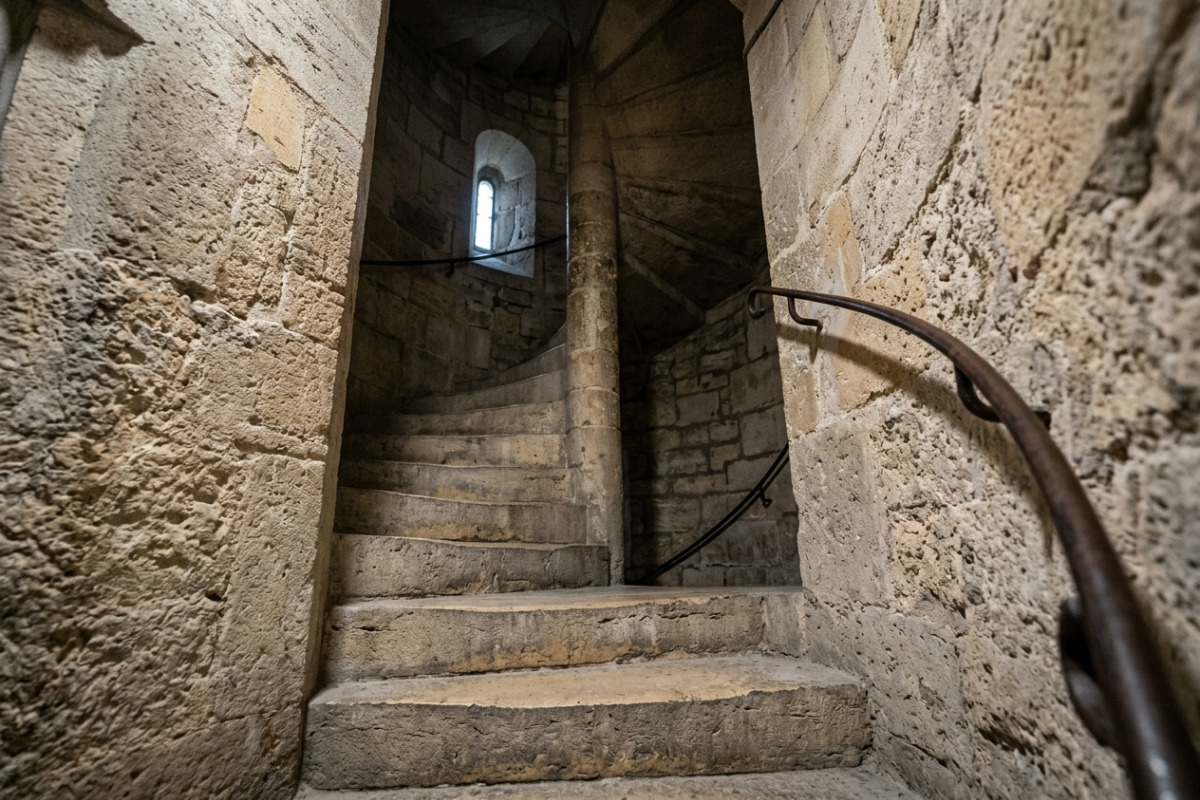
During this initial phase, the choir and the double ambulatory were constructed. The architects employed revolutionary techniques to achieve height and grandeur that Romanesque architecture simply could not support. The walls rose higher, and the windows grew larger, flooding the sanctuary with ethereal light. If you explore the cathedral sections today, you can still trace these early Gothic elements in the choir, which remains the spiritual heart of the building. The use of pointed arches and ribbed vaults were key innovations, allowing for the distribution of weight and the creation of larger, more open spaces. Imagine the skill required to shape these massive stones and lift them into place without modern machinery!
- 1163: Laying of the cornerstone.
- 1182: Consecration of the high altar.
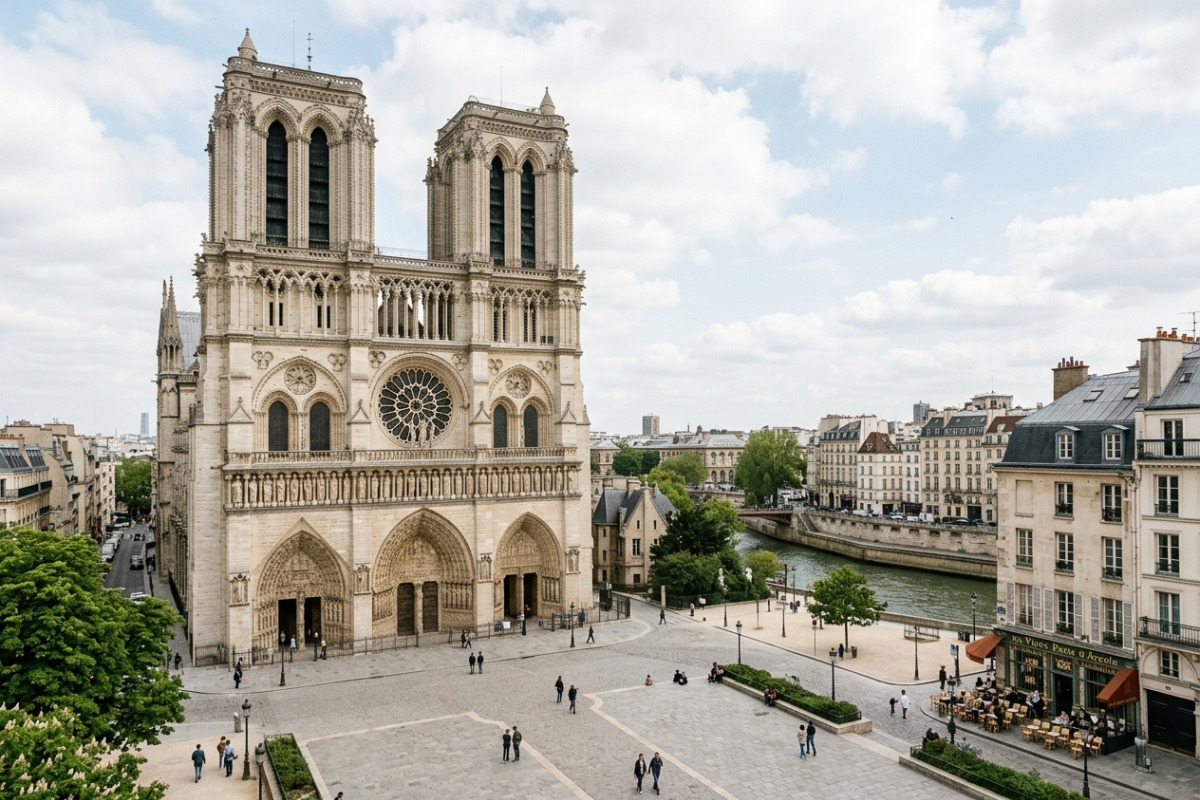
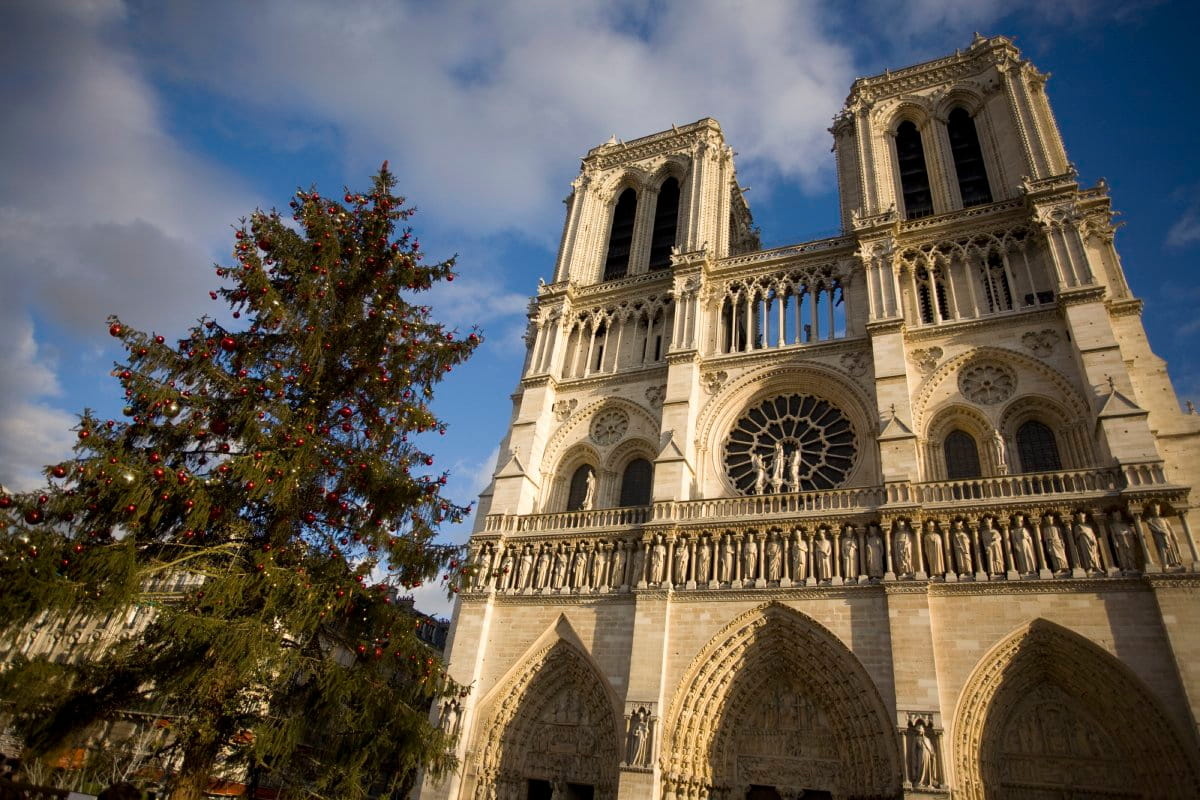
- 1200-1250: Construction of the nave and the iconic twin towers of the western façade.
The Rayonnant Era and Structural Innovation (1250–1350)
As the 13th century progressed, the architecture shifted toward the Rayonnant style, characterized by even more intricate tracery and larger rose windows. This era gave us the spectacular North and South Rose Windows, which are widely considered masterpieces of medieval glasswork. The North Rose Window, dedicated to the Virgin Mary, is particularly renowned for its vibrant blues and reds. To support the soaring height of the walls without them collapsing under the weight of the roof, the master builders perfected the use of flying buttresses. These external stone arches act as an exoskeleton, transferring weight away from the walls and allowing for the massive stained glass panels that define the interior atmosphere. The intricate carvings and detailing on these buttresses also added to the cathedral's aesthetic appeal.
By the mid-14th century, the cathedral was largely complete. It stood as a beacon of medieval engineering, a "Bible in stone" for a populace that was largely illiterate, telling scripture stories through its portals and glass. However, architecture is rarely static, and the coming centuries would bring significant changes.
The Age of Alterations and Revolution (17th–18th Centuries)
While the medieval period built the legend, the 17th and 18th centuries were less kind to the Gothic aesthetic. During the reign of Louis XIV, the cathedral underwent significant modifications to align with the classical tastes of the Enlightenment. The original rood screen was destroyed, and stained glass was replaced with clear glass to let in more "rational" light. The choir was remodeled, disrupting the medieval harmony. The removal of the rood screen, a decorative partition separating the nave from the choir, fundamentally changed the spatial experience of the cathedral.
The darkest hour for the structure came during the French Revolution in the 1790s. Seen as a symbol of the old regime, the cathedral was ransacked. The statues of biblical kings on the façade were beheaded (mistaken for French kings), the spire was dismantled due to instability, and the building was repurposed as a "Temple of Reason" and later a warehouse. By the early 19th century, Notre Dame was a crumbling ruin, teetering on the brink of demolition.
Viollet-le-Duc and the Romantic Resurrection (1844–1864)
We owe the survival of Notre Dame largely to the author Victor Hugo. His 1831 novel, The Hunchback of Notre Dame, sparked a massive public outcry to save the cathedral. In 1844, a young and passionate architect named Eugène Viollet-le-Duc, along with Jean-Baptiste Lassus, won the commission to restore the edifice. This was not merely a repair job; it was a re-imagining.
Viollet-le-Duc believed in restoring a building to a state of completeness that may never have existed. He brought back the Gothic glory, designing the famous gargoyles and chimeras that gaze over Paris today (which were not part of the original medieval design). These grotesque figures served as both decoration and functional waterspouts. Most notably, he constructed a new, taller spire made of oak and lead, adorned with statues of the apostles—including one of St. Thomas that bore the architect's own face, looking up at the spire. The spire's design was inspired by medieval precedents but was ultimately a unique creation of Viollet-le-Duc.
Key Restorations by Viollet-le-Duc:
- Reconstruction of the grand spire (flèche).
- Creation of the Gallery of Chimeras.
- Restoration of the sculpture on the West Façade.
- Reinstating stained glass windows.
The Fire and the Phoenix (2019–Present)
The entire world held its breath on April 15, 2019. A devastating fire broke out in the attic, known as "The Forest" due to its massive ancient oak beams. Within hours, the world watched in horror as Viollet-le-Duc’s spire collapsed into the nave, and the roof was consumed. It seemed like the end of an era, but it became the start of the most ambitious restoration project of the 21st century.
The years following the fire were defined by a global debate: should the cathedral be modernized or restored to its previous state? The decision was made to rebuild it exactly as it was, honoring both the medieval builders and Viollet-le-Duc’s 19th-century contributions. Artisans from around the world converged to hew oak beams by hand, reconstruct the limestone vaults, and restore the grand organ. The restoration also involved advanced techniques like 3D scanning to ensure accuracy. If you are looking for visiting information today, you are stepping into a building that has been meticulously healed.
Architectural Timeline Summary
| Period | Key Event | Architectural Impact |
| 1163–1250 | Construction Begins | Choir, nave, and western façade completed in Early Gothic style. |
| 1250–1345 | Rayonnant Phase | Addition of transepts, spectacular Rose Windows, and flying buttresses. |
| 1790s | French Revolution | Destruction of statues, removal of the original 13th-century spire, severe damage. |
| 1844–1864 | Viollet-le-Duc Restoration | Installation of the iconic 19th-century spire, gargoyles, and structural reinforcement. |
| 2019 | The Great Fire | Collapse of the spire and roof; destruction of the wooden framework. |
| 2019–2024 | The Great Restoration | Identical reconstruction of the spire and roof; cleaning of the interior stone. |
Experiencing the Marvel Today
Today, in 2026, the cathedral is once again open to the faithful and tourists alike. The interior is brighter than it has been in centuries, thanks to the cleaning of the walls during the restoration process. The blonde stone radiates warmth, and the stained glass glows with renewed intensity. Seeing the reconstructed spire from the outside is a moving experience, knowing the effort required to raise it once more.
For those planning to witness this architectural evolution in person, it is essential to plan ahead. Due to the renewed interest following the reopening, securing entry can be competitive. We highly recommend booking your tickets well in advance to ensure you can enter on your preferred dates. Whether you want to climb the towers or walk the nave, preparation is key. Consider downloading a virtual tour app on your phone to enhance your visit with historical context and architectural insights.
Before you go, it is also helpful to check the FAQ section for updates on accessibility and specific rules regarding the newly restored areas. Notre Dame has survived wars, revolutions, and fires. It stands today not just as a relic of the past, but as a symbol of the future—a timeline of stone that continues to be written.