Gothic Architecture: The Symbolism Behind Notre Dame's Design
When you stand before the majesty of Notre Dame de Paris, especially now in January 2026 following its triumphant restoration, you are looking at far more than a masterpiece of engineering. You are reading a book written in stone. For the medieval mind, a cathedral was not merely a place of worship; it was a physical representation of the divine order, a bridge between the earthly realm and the heavens. Every arch, column, and window was designed with a specific intention, blending structural necessity with profound spiritual symbolism. As you plan your journey to witness this miracle of limestone and glass, understanding the hidden meanings behind its Gothic elements will transform your visit from a simple sightseeing tour into a deep cultural pilgrimage.
The Vertical Impulse: Reaching for the Heavens
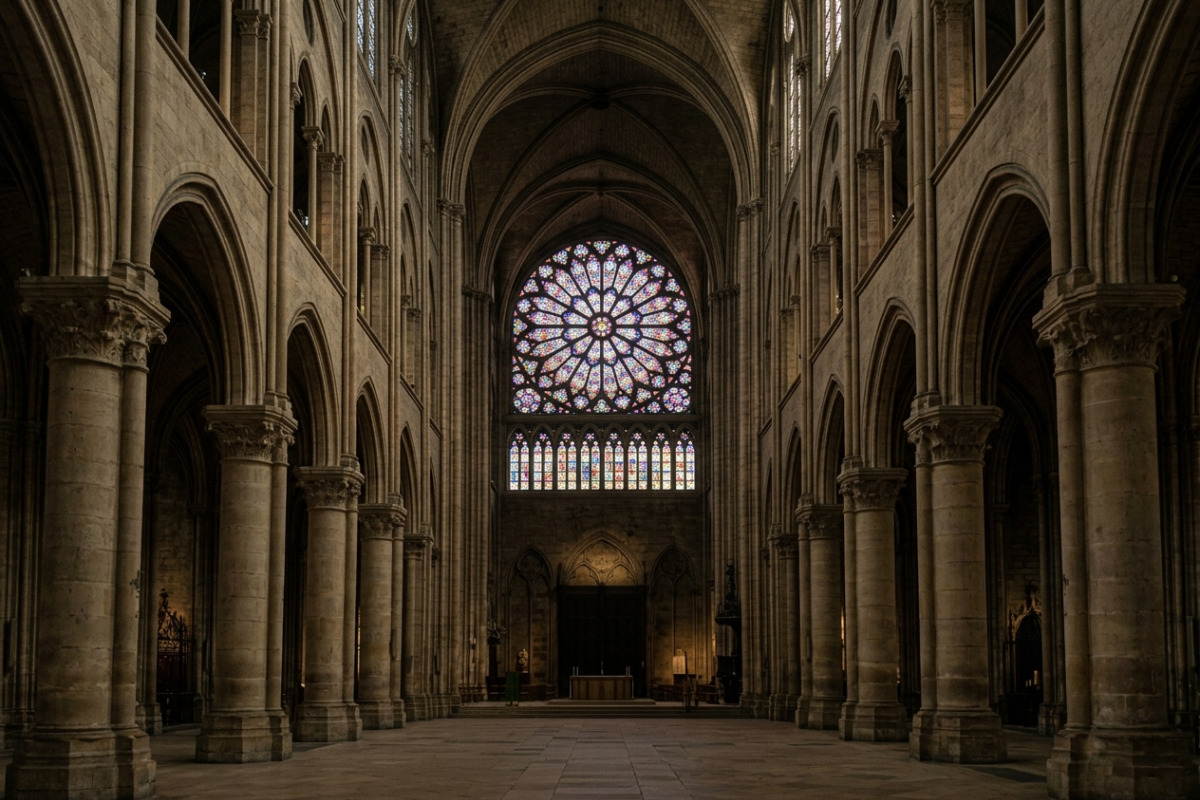
The most immediate sensation visitors experience upon entering Notre Dame is an overwhelming feeling of verticality. This was the defining ambition of the High Gothic style: to draw the eye, and consequently the soul, upward. The architects achieved this through the use of the pointed arch, a revolutionary departure from the rounded Romanesque arches that preceded them. While the pointed arch offered superior structural stability by directing weight downward rather than outward, its symbolic purpose was to point physically toward God. The soaring nave, rising over 30 meters, was designed to make the individual feel small in the presence of the divine, yet simultaneously elevated by the sheer grandeur of the space.
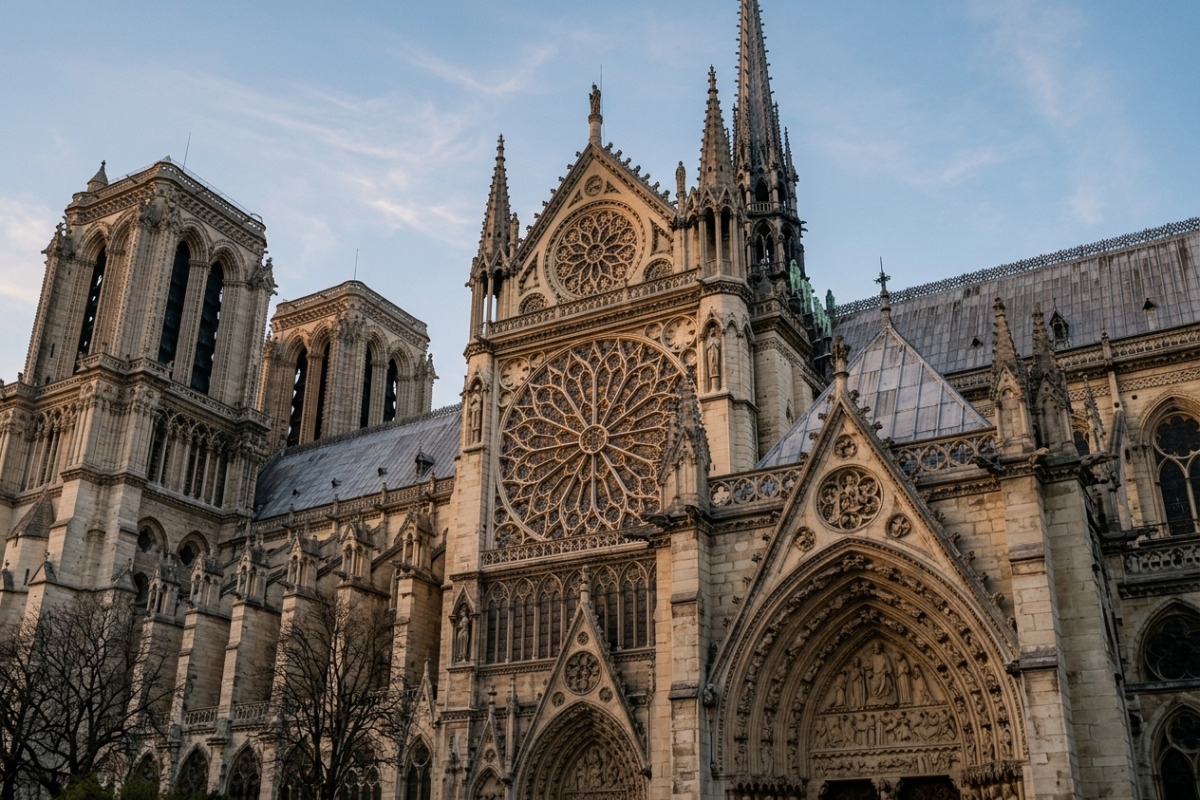
This vertical momentum culminates in the spire. The iconic flèche, which has been so lovingly restored, acts as a finger pointing directly to the sky. It serves as an axis mundi, a center of the world connecting the earth below to the celestial sphere above. When you secure your tickets to visit the site, take a moment before entering to trace that line from the pavement up to the cross at the pinnacle. It is a visual prayer, solidified in architecture, representing the human aspiration to transcend the material world.
Lux Nova: The Theology of Light
If verticality is the body of Gothic architecture, light is its soul. Abbot Suger, often credited with birthing the Gothic style, coined the term Lux Nova or "New Light." He believed that light was the closest physical manifestation of the divine. Therefore, the walls of the cathedral were opened up to allow as much illumination as possible. This was not just for visibility; it was a theological statement. The light passing through the stained glass was believed to be purified and sanctified, washing the congregation in holy radiance.
The Rose Windows: Geometry of the Infinite
Among the most spectacular features you will encounter when you explore the cathedral sections are the three great Rose Windows. These are not merely decorative; they are complex cosmological maps. The circle, having no beginning and no end, is the symbol of God and infinity. The intricate webs of stone tracery and glass radiate from a central point, usually depicting Christ or the Virgin Mary, symbolizing that all creation flows from a divine center. Beyond their symbolic shape, the colours used in the stained glass were also carefully chosen. Blue, often associated with the Virgin Mary, evokes peace and serenity. Red, representing Christ's blood, signifies passion and sacrifice. Gold, symbolizing divine light, illuminates the narratives depicted within the glass.
Consider the craftsmanship involved: each piece of glass was hand-cut and painted before being fired, a painstaking process that required immense skill and dedication. The lead that holds the glass together, while functional, also adds to the visual complexity, creating a network of lines that further define the images. These windows are not just sources of light; they are intricate tapestries of faith and artistry.
- The North Rose Window: Dedicated to the Old Testament, it sits in the shade, representing the time before the arrival of Christ.
- The South Rose Window: Bathed in warm sunlight, it represents the New Testament and the triumph of Christ.
- The West Rose Window: The first one you see from the outside, often associated with the Last Judgment and the transition from the temporal to the eternal.
The Flying Buttress: Strength in Openness
One of the most recognizable silhouettes of Notre Dame is created by the flying buttresses. To the modern eye, they look like the exoskeleton of a giant organic creature. Historically, they were the engineering breakthrough that allowed the walls to be dissolved into glass. By transferring the heavy outward thrust of the vaulted ceilings away from the walls and down to external piers, architects could replace solid masonry with the massive windows mentioned earlier.
Symbolically, the flying buttresses represent the support of the church community and the grace of God holding up the faithful. They show that strength does not always come from solidity and heaviness; it can also come from balance and external support. They strip the walls of their burden, allowing the interior to become a vessel for light. As you walk around the exterior gardens, detailed in our visiting information, notice how these stone arches seem to defy gravity, creating a sense of weightlessness that mirrors the spiritual shedding of earthly burdens.
Guardians of the Threshold: Gargoyles and Chimeras
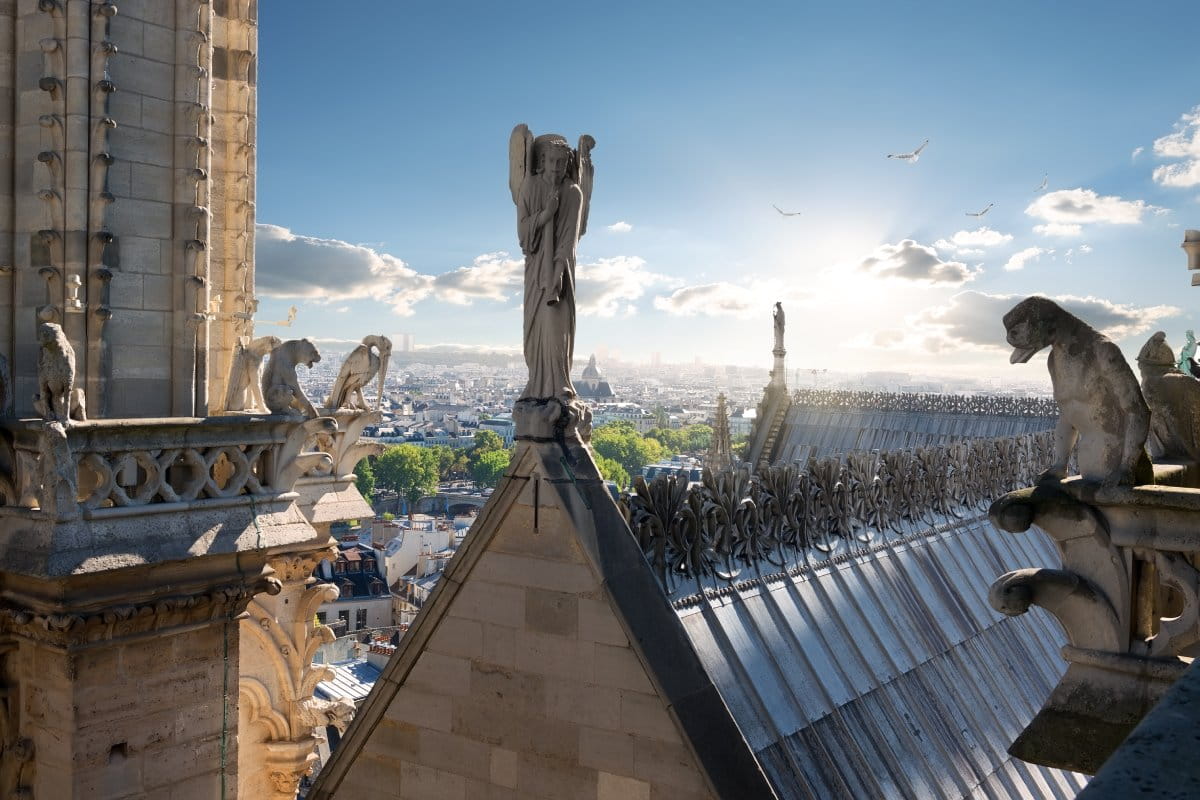
High above the city streets, the famous stone creatures of Notre Dame peer down at Paris. Often confused with one another, the gargoyles and chimeras (or grotesques) serve different functions, both practical and symbolic. It is fascinating to realize that the cathedral includes imagery of monsters alongside saints. This duality represents the complexity of the universe—that the sacred stands amidst the profane, and that even the grotesque has a place in creation.
While both gargoyles and chimeras are fantastical figures, their purpose and placement differ significantly. Gargoyles, derived from the Old French word 'gargouille' meaning throat, are functional waterspouts designed to drain rainwater away from the building's walls, preventing water damage. Chimeras, on the other hand, are purely decorative, serving no practical purpose. They are often more elaborate and grotesque in design, featuring a variety of animal and human features combined in bizarre and unsettling ways. These silent watchers add to the cathedral's mystique, reminding visitors of the ever-present battle between good and evil.
| Feature | Function | Symbolism |
| Gargoyles | Functional waterspouts designed to throw rainwater away from the walls. | They represent evil fleeing from the church, or the idea that faith purifies, turning the "waste" (rain) outward. |
| Chimeras (Grotesques) | Purely decorative statues located on the gallery levels. | They symbolize the chaos of the unredeemed world, keeping watch over the city and reminding viewers of the perils of sin. |
These creatures also serve as a stark contrast to the serene beauty of the interior. To enter the church, one must pass by these monsters, symbolically leaving the chaotic, dangerous world behind to enter the ordered sanctuary of the New Jerusalem.
The Portals: Gateways to Salvation
The entrance to a Gothic cathedral is never just a door; it is a threshold between two worlds. The western façade of Notre Dame features three magnificent portals, each teeming with sculpture. In the medieval era, when literacy was rare, these portals served as a "Bible for the poor." The intricate carvings told the stories of the saints, the Virgin Mary, and the Last Judgment, educating the faithful before they even stepped inside.
The central portal, the Portal of the Last Judgment, is particularly poignant. It depicts the weighing of souls, a somber reminder of the ultimate accountability of human life. Yet, the beauty of the artistry suggests hope. The orderly arrangement of figures reflects the harmony of God’s kingdom. If you have questions about specific statues or accessibility to these areas, the FAQ page is an excellent resource to check before your arrival.
A Testament to Human Aspiration
Notre Dame de Paris is more than a historical monument; it is a philosophical statement constructed in limestone. From the mathematical precision of its proportions to the narrative depth of its sculptures, every inch of the cathedral was designed to elevate the human spirit. The Gothic style, with its emphasis on light, verticality, and structural daring, seeks to make the invisible visible.
As you wander through the nave or gaze up at the rib-vaulted ceiling, remember that you are witnessing the physical embodiment of centuries of prayer, innovation, and hope. The symbolism of Notre Dame reminds us that beauty is a bridge to the divine, and that even stone can be made to sing.