The Role of Technology in Notre Dame's Restoration
When the world watched the spire of Notre Dame fall in April 2019, it felt like a piece of history was being erased before our eyes. The devastation was immense, and the path to recovery seemed impossibly long, with some experts initially predicting a timeline of decades. Yet, here we are in January 2026, walking beneath those majestic vaults once again, witnessing a resurrection that feels nothing short of miraculous. While the heart of this restoration was the skilled hands of stonemasons, carpenters, and master craftsmen, the unsung hero that accelerated this timeline was cutting-edge technology. The marriage of medieval artistry and futuristic engineering has not only restored the cathedral but preserved it for centuries to come.
The Digital Ghost: How 3D Scanning Saved the Structure
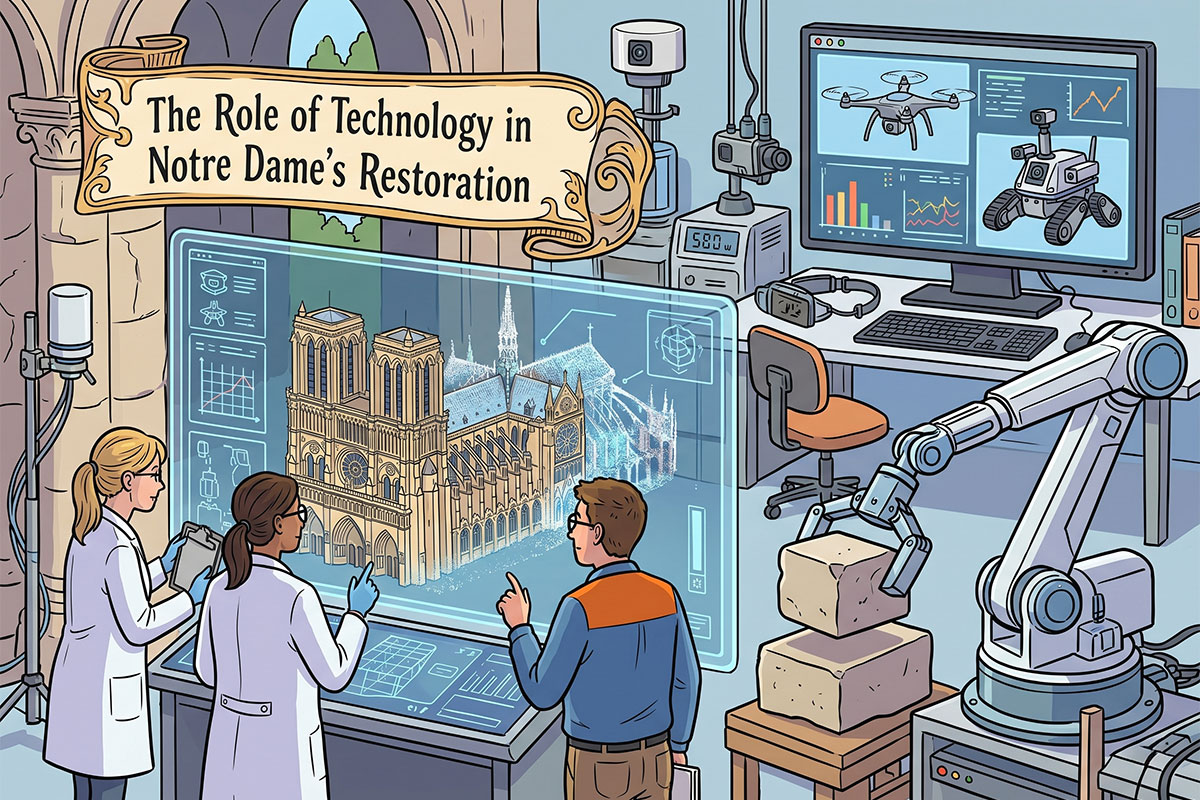
Long before the fire broke out, art historian Andrew Tallon had painstakingly created a digital archive of the cathedral that would prove to be its salvation. Using advanced laser scanning technology, Tallon captured billions of data points, creating a "point cloud" that mapped the cathedral with millimeter-level accuracy. This was not merely a photograph; it was a precise geometric blueprint of the building as it stood before the damage. When architects began the daunting task of reconstruction, they didn't have to guess the dimensions of the lost spire or the curvature of the collapsed vaults; they had a perfect digital ghost to guide them.
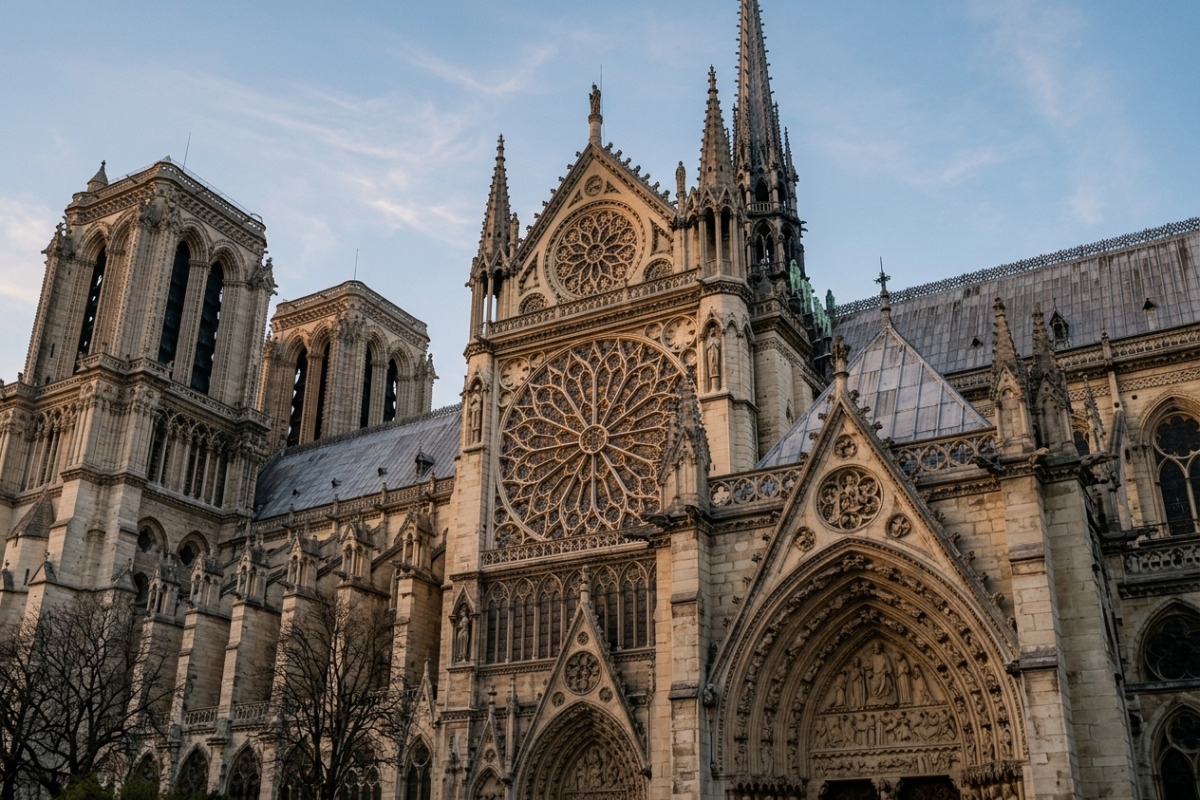
These scans allowed engineers to assess the structural integrity of the remaining walls without physically touching them, which was crucial in the early days when the site was too unstable for human entry. By comparing post-fire scans with Tallon’s pre-fire data, the team could identify exactly which stones had shifted and by how much. This level of precision meant that the new limestone blocks could be cut to fit into the ancient structure seamlessly, bridging the gap between the 12th and 21st centuries. For example, the robotic cutting machines, guided by Tallon's data, were able to carve replacement stones with an accuracy of less than one millimeter. This precision was vital for ensuring the structural integrity of the rebuilt vaults. If you want to see the seamless integration of new and old stone for yourself, you can explore the various Cathedral Sections that have been meticulously rehabilitated.
Building Information Modeling (BIM): The Collaborative Brain
Restoring a monument of this scale requires the coordination of thousands of people, from architects and archaeologists to carpenters and crane operators. To manage this logistical beast, the restoration team utilized Building Information Modeling (BIM). This technology goes far beyond standard 3D modeling; it creates an intelligent, shared digital representation of the physical facility. Every beam, statue, and window in the digital model contains data about its material, weight, age, and condition.
The BIM platform served several critical functions during the restoration process:
- Conflict Detection: It allowed architects to foresee potential clashes between new structural elements and existing medieval masonry before construction began.
- Material Analysis: The system helped calculate the exact load-bearing requirements for the new roof structure, ensuring the ancient walls could support the weight.
- Real-Time Updates: As workers on-site made progress, the digital model was updated, keeping teams in Paris and across France perfectly synchronized.
This "digital twin" of Notre Dame allowed for simulation and testing that would have been impossible a decade ago. For instance, engineers used BIM to simulate the effects of wind and weather on the new spire, ensuring its stability and longevity. It ensured that the reconstruction of the famous "Forest"—the complex wooden lattice of the roof—respected the original medieval techniques while adhering to modern safety standards.
Robotics and Drones: Going Where Humans Couldn't
In the immediate aftermath of the fire, the interior of the cathedral was a hazardous zone of falling debris and molten lead. Sending human workers in to assess the damage was simply too dangerous. This is where robotics and drone technology played a pivotal role. Specialized drones equipped with high-resolution cameras and thermal sensors flew into the nave and transepts, capturing imagery that allowed experts to inspect the damage from safety. These flying devices provided the first close-up looks at the gargoyles and the condition of the stained glass windows high above the ground.
Furthermore, remote-controlled robots were deployed to clear rubble from the cathedral floor. These machines, capable of handling heavy loads and navigating uneven terrain, removed charred beams and stone fragments. One specific robot, nicknamed "Colossus," was equipped with a vacuum system to safely remove lead dust, minimizing the risk of lead poisoning for human workers. This robotic assistance sped up the cleanup phase significantly, allowing archaeologists to sift through the debris to recover valuable artifacts and consecrated items earlier than anticipated. Today, as you walk through the cleared and polished nave, it is easy to forget the mountain of debris that once lay there, removed largely by mechanical proxies.
A Comparison of Restoration Eras
The restoration of the 19th century led by Eugène Viollet-le-Duc was a masterpiece of its time, but the tools available to the modern team have revolutionized the process. Here is how the approach has evolved:
| Aspect | 19th Century (Viollet-le-Duc) | 21st Century Restoration |
| Surveying | Hand measurements, sketches, and manual calculations. | 3D Laser Scanning, LiDAR, and Photogrammetry. |
| Design | 2D paper blueprints and watercolor renderings. | 3D Building Information Modeling (BIM) and Digital Twins. |
| Safety | High-risk scaffolding and manual inspection. | Drones, climbing robots, and sensor monitoring. |
| Materials | Stone and wood selected by eye and experience. | Digital fabrication, chemical analysis, and stress simulation. |
Acoustic Engineering: Restoring the Voice of the Cathedral
One of the most intangible yet vital aspects of Notre Dame is its sound. The cathedral is not just a visual spectacle; it is an instrument. The fire and the subsequent loss of the roof changed the building's acoustic signature entirely. To ensure that the choir and the Great Organ would sound as majestic as before, acoustic engineers used complex computer simulations. They modeled how sound waves bounced off the medieval stone versus the new materials being introduced.
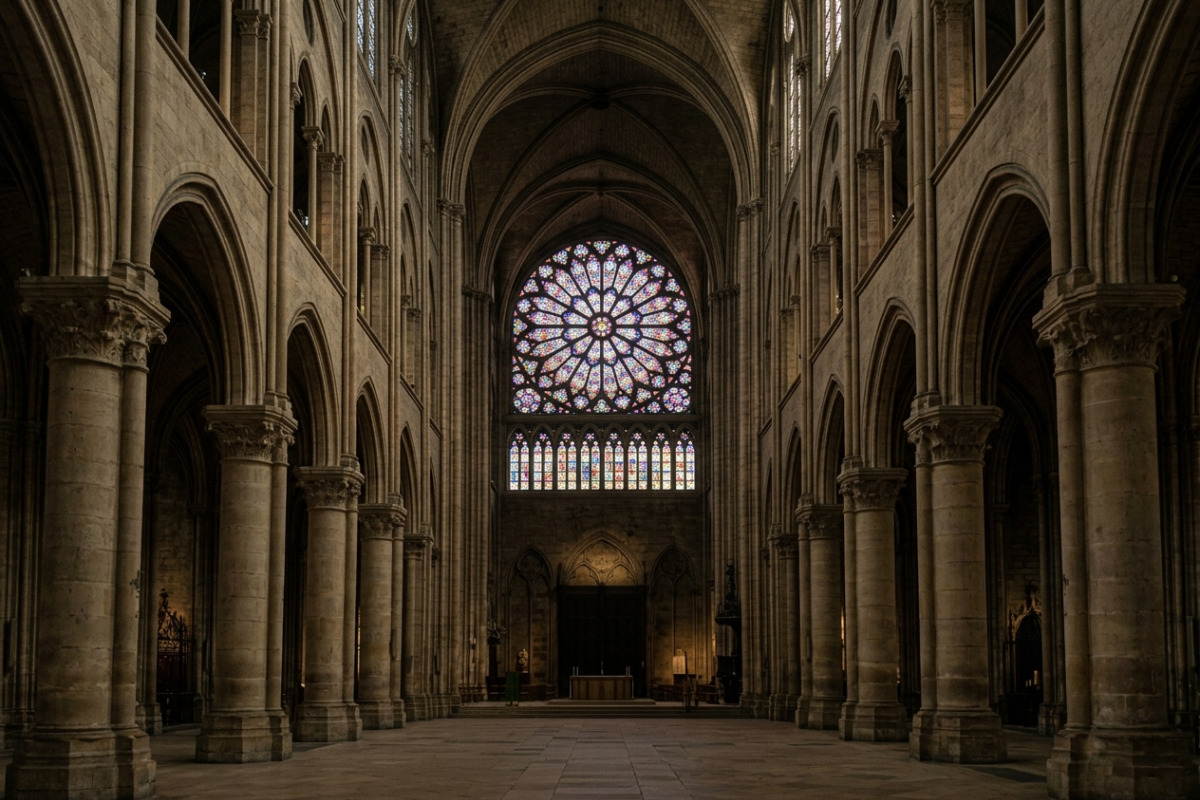
By virtually reconstructing the interior volume, they could predict how the new wooden roof would absorb or reflect sound. These simulations even accounted for the presence of visitors, as human bodies affect the acoustics of a space. This ensured that when the first mass was held, the reverberation time was perfect, preserving the ethereal quality of the Gregorian chants that have filled the space for centuries. Visitors attending services today are hearing the cathedral exactly as it was meant to be heard, thanks to these invisible calculations.
Planning Your Visit to the Tech-Restored Wonder
Understanding the technology behind the restoration adds a profound layer of appreciation to your visit. When you look up at the spire, you know that mathematical algorithms helped shape its physical form. When you touch the cool stone of the pillars, you understand that lasers verified their stability. The cathedral is now fully open to the public, and seeing the results of this global effort is a moving experience. However, because the reopening is still fresh in the minds of travelers worldwide, crowds are significant.
To witness this architectural triumph, it is essential to plan ahead. You should secure your entry well in advance by booking tickets online. The demand is high, and time slots fill up weeks rapidly. Before you go, it is also wise to review the current Visiting Information to understand the new entry procedures and security measures that have been implemented alongside the structural repairs.
For those who have specific queries about accessibility, photography rules, or guided tours that might focus on the restoration history, the FAQ page is an excellent resource to consult. Notre Dame stands today not just as a symbol of faith and history, but as a testament to what humanity can achieve when we combine our heritage with the limitless potential of modern technology.